

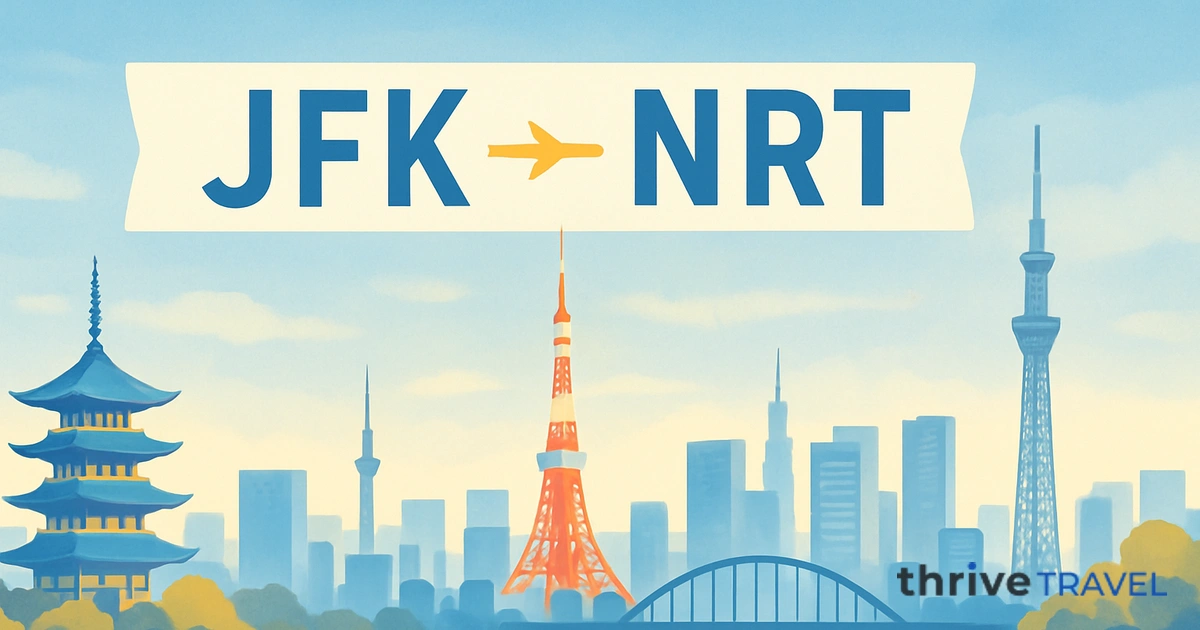
The journey from JFK to NRT is one of the most iconic transpacific routes in commercial aviation, connecting two of the world's greatest cities across roughly 6,750 miles of ocean and sky. Whether you're heading to Japan for the first time or making a familiar return, this route offers a fascinating transition between two vastly different cultures that begins the moment you step on board.
Direct flights from New York's John F. Kennedy International Airport to Tokyo's Narita International Airport typically clock in at around 14 hours eastbound, while the return trip benefits from jet stream tailwinds and often takes closer to 12 or 13 hours. Several major carriers operate this route, including Japan Airlines, All Nippon Airways, and American Airlines. Japanese carriers are particularly beloved for their exceptional in-flight service, with attentive cabin crews, surprisingly good meals, and a level of hospitality that gives travelers a taste of Japan before they even land.
Timing your trip wisely can make all the difference. Late March through mid-April is peak cherry blossom season, when parks across Tokyo transform into canopies of pale pink. Autumn, particularly November, brings similarly stunning foliage and milder temperatures. Summer months are hot and humid, coinciding with the rainy season in June and July, though festivals and fireworks displays provide compelling reasons to visit despite the weather. Winter appeals to those seeking fewer crowds and the chance to combine a Tokyo visit with skiing in Nagano or Hokkaido.
For the long-haul flight itself, a few practical tips go a long way. Noise-canceling headphones are essential, and compression socks can help with circulation during the extended time at altitude. Try to adjust your sleep schedule a day or two before departure, since Tokyo is 14 hours ahead of New York during daylight saving time. Hydration matters more than most people realize on flights this long, so drink water consistently throughout.
Once you land at Narita, the Narita Express train whisks you into central Tokyo in about an hour, making the airport transfer remarkably smooth. The contrast hits quickly: the quiet efficiency of Japanese transit, the immaculate streets, the blend of ultramodern architecture alongside ancient temples.
Flying from JFK to NRT is more than just a commute between continents. It represents one of the great cultural bridges in global travel, linking the electric energy of Manhattan with the refined intensity of Tokyo. Few routes in the world offer such a dramatic and rewarding shift in perspective over the course of a single flight.