

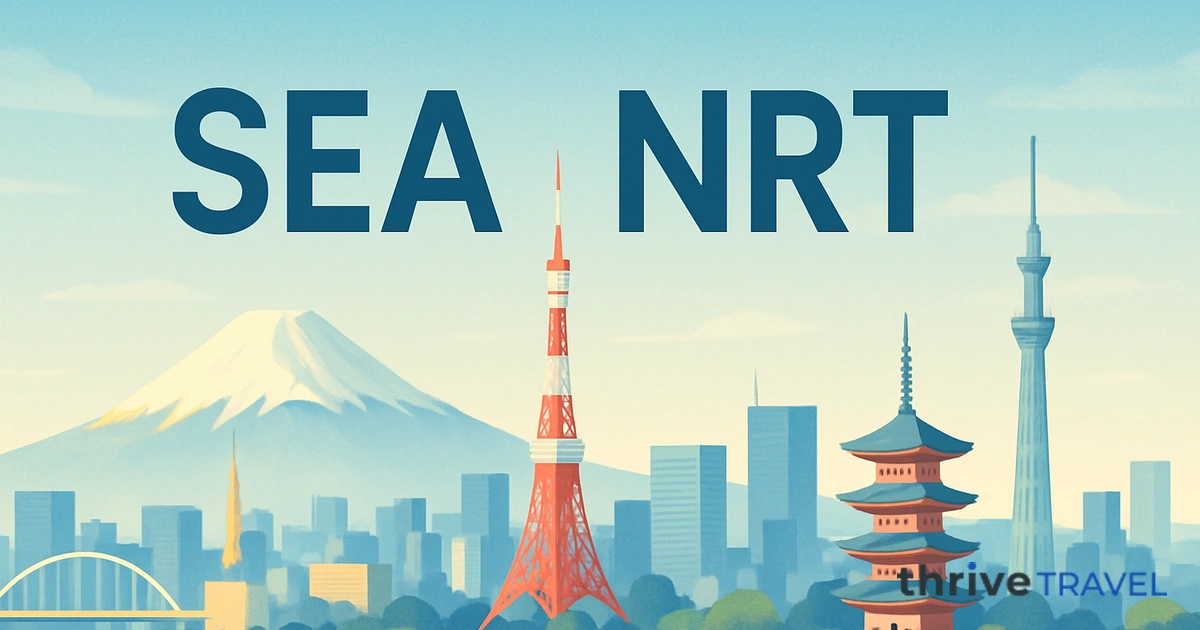
The flight from Seattle to Tokyo Narita is one of the most popular transpacific routes for travelers on the West Coast, connecting the Pacific Northwest with Japan's sprawling capital region. Covering roughly 4,800 miles across the Pacific Ocean, the journey typically takes between 10 and 11 hours heading westbound, while the return flight is slightly shorter at around 9 to 10 hours thanks to favorable jet stream winds.
Several major carriers operate this route, giving travelers a solid range of options. Delta Air Lines and Alaska Airlines offer nonstop service from Seattle-Tacoma International Airport, while All Nippon Airways and Japan Airlines provide their own direct flights with the renowned hospitality Japanese carriers are known for. Flying with a Japanese airline can feel like the trip has already begun before you land, with attentive service, Japanese meal options, and a calm cabin atmosphere that sets the tone for your arrival.
Seasonality plays a meaningful role in planning a trip along this corridor. Spring remains the most sought-after time to visit Japan, as cherry blossom season between late March and mid-April draws visitors from around the world. Autumn is equally stunning, with brilliant fall foliage peaking in November across Tokyo's parks and surrounding regions. Summer months can be hot and humid, though festivals and fireworks displays add cultural vibrancy. Winter offers its own appeal with fewer crowds, crisp air, and the chance to experience traditional onsen culture at its coziest.
For a comfortable flight from Seattle to Tokyo Narita, a few practical considerations are worth keeping in mind. The time difference is 17 hours ahead during Pacific Standard Time, so jet lag can be significant. Many seasoned travelers recommend arriving in Tokyo during the evening local time and pushing through to a normal bedtime to reset your internal clock. Noise-canceling headphones, a good neck pillow, and staying hydrated throughout the flight make a noticeable difference on a journey of this length.
Narita International Airport sits about 60 miles east of central Tokyo, so plan for a transfer upon landing. The Narita Express train reaches Tokyo Station in roughly an hour and is one of the most efficient options. Limousine buses and shared shuttles also serve major hotels and transit hubs throughout the city.
What makes this route particularly appealing is Seattle's geographic advantage. As one of the closest major U.S. cities to Asia, it offers shorter flight times compared to departures from the East Coast or even California. Whether you are heading to Japan for its cuisine, its temples, its technology, or simply the thrill of exploring one of the world's most fascinating countries, this route provides an efficient and enjoyable way to get there.