

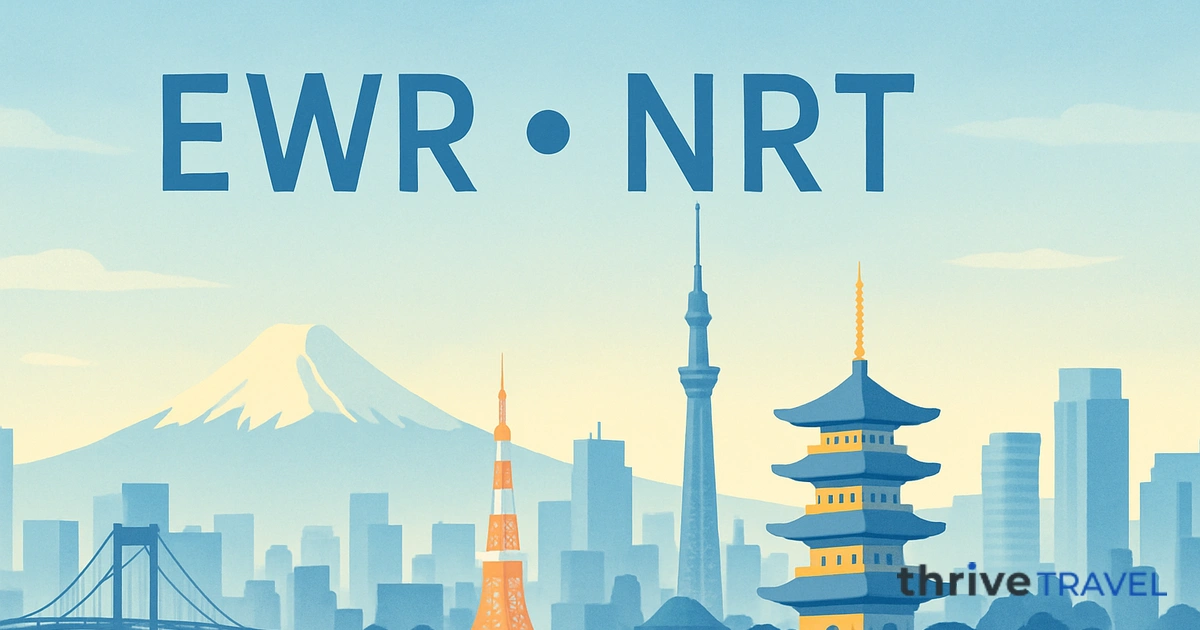
The journey from Newark Liberty International to Tokyo Narita is one of the longest nonstop routes operated between the United States and Asia, covering roughly 6,700 miles and taking around 14 hours westbound. It is a flight that bridges two of the world's most dynamic metropolitan regions, connecting the New York area with the heart of Japan in a single hop.
United Airlines operates the main nonstop service on this route, typically using Boeing 777-300ER aircraft equipped with Polaris business class, premium economy, and standard economy cabins. ANA also offers a competitive product through its partnership network, while travelers seeking alternatives may consider one-stop itineraries via Chicago, San Francisco, or Seoul on carriers like Korean Air or Asiana. The westbound leg generally departs Newark in the late morning or around midday, arriving in Tokyo the following afternoon. Eastbound flights, helped along by the jet stream, can be noticeably shorter, sometimes landing in Newark within 13 hours.
The time of year you choose to fly from EWR to NRT can shape both the price and the experience. Spring, particularly late March through early April, draws crowds eager to witness cherry blossom season, and fares rise accordingly. Autumn brings crisp weather and brilliant foliage across Japan, making October and November another popular window. Summer is humid in Tokyo but coincides with school holidays, while winter offers quieter cabins, lower fares, and access to Japan's excellent ski regions.
For a flight of this length, preparation matters. Staying hydrated, moving around the cabin every few hours, and adjusting your sleep schedule before departure can ease the substantial 13- or 14-hour time difference. Narita Airport sits about 60 kilometers from central Tokyo, so factor in transfer time via the Narita Express train, the Keisei Skyliner, or a limousine bus. Travelers heading to Haneda-area accommodations may want to compare alternative routings, since Narita is the more distant of Tokyo's two airports.
What makes this particular corridor interesting is the contrast it offers. You leave the dense, vertical energy of the New York region and arrive in a city that balances ultramodern districts like Shibuya and Shinjuku with centuries-old shrines, ryokan inns, and meticulous culinary traditions. Business travelers value the route for its reliability and direct connection, while leisure passengers often pair Tokyo with onward domestic flights to Kyoto, Osaka, or Hokkaido. Whether it is your first trip to Japan or a return visit, the Newark to Narita link remains a practical and rewarding gateway.