

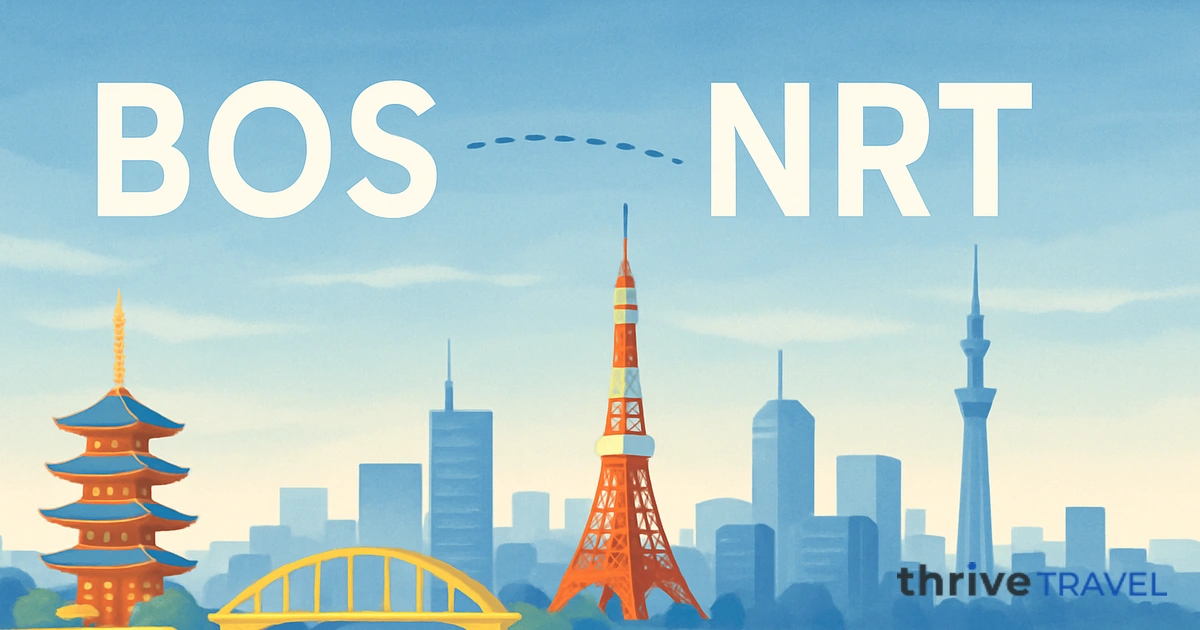
The journey from Boston to Tokyo Narita is one of the more rewarding long-haul routes connecting the U.S. East Coast with East Asia. Covering roughly 6,700 miles, the trip typically takes around 13 to 14 hours on a nonstop flight, while one-stop itineraries through cities like Detroit, Chicago, or Toronto can stretch travel time to 18 hours or more. Japan Airlines currently operates the headline nonstop service, while connecting options are offered by United, American, Delta, and Air Canada, giving travelers a fair range of cabin products and schedules to choose from.
The in-flight experience tends to be smooth, as carriers serving Japan often refine their service for a discerning audience. Expect attentive cabin crew, well-paced meal services often featuring Japanese options, and comfortable seating even in economy on widebody aircraft like the Boeing 787 or 777. Premium economy and business class are popular upgrades on this route, given the length of the flight and the time zone shift of 13 to 14 hours, which can make rest a top priority.
Choosing when to travel can make a noticeable difference. Spring, especially late March through April, draws travelers eager to witness Japan's cherry blossom season, while autumn brings vivid foliage and cooler weather ideal for sightseeing. Summer months are warm and humid in Tokyo and tend to be busier, while winter offers quieter streets, crisp air, and easier access to ski regions north and west of the capital. Fares from Boston to Narita generally peak around the cherry blossom window and the December holidays, with shoulder seasons in May, early June, and late October offering better value.
A few practical tips help smooth the experience. Narita Airport sits about 60 kilometers from central Tokyo, so factor in an additional 60 to 90 minutes via the Narita Express train or a Limousine Bus to reach your hotel. Bringing a charged Suica or Pasmo IC card, or setting one up on your phone before arrival, simplifies transit immediately upon landing. Travelers should also consider booking flights that arrive in the afternoon, allowing time to clear immigration, settle in, and adjust to the steep time difference.
What makes this route interesting is the contrast it bridges: the colonial brick streets and academic energy of Boston against Tokyo's blend of meticulous tradition and futuristic urban life. Whether the trip is for business, study, or first-time exploration of Japan, flying between these two cities offers a long but well-supported passage into a culture that rewards curiosity at every turn.