

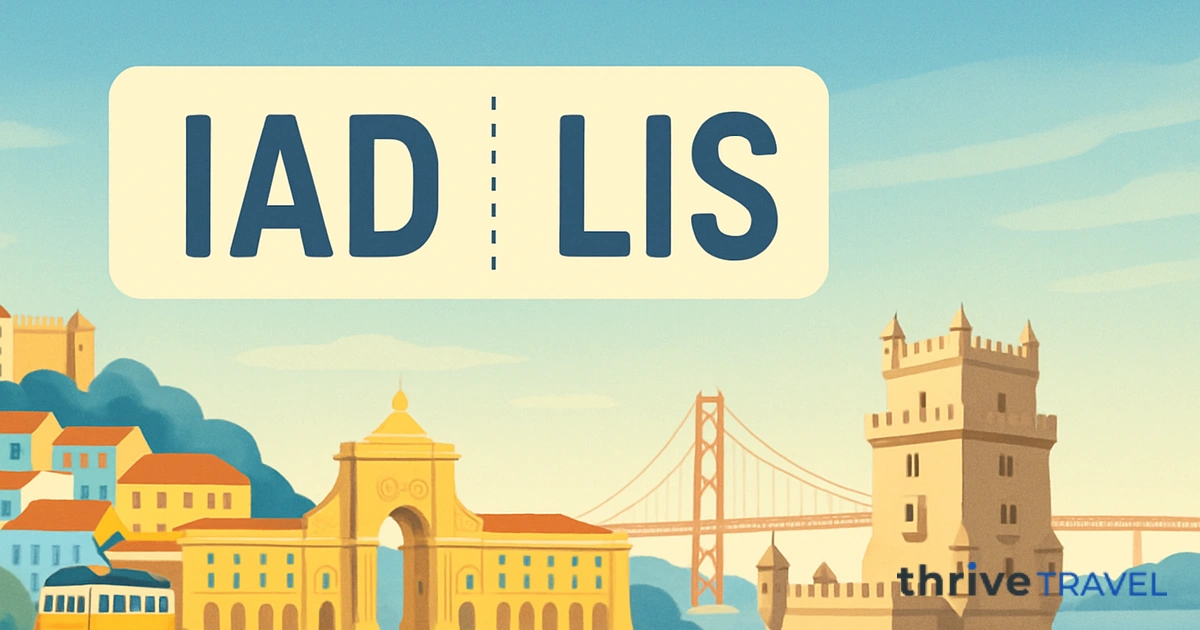
The journey from Washington Dulles to Lisbon is one of the most rewarding transatlantic crossings for travelers heading to Europe. Covering roughly 3,600 miles, the eastbound flight typically takes between seven and a half and eight hours, while the return trip can stretch closer to nine hours due to prevailing headwinds. Most departures leave IAD in the early evening, allowing passengers to sleep through the night and arrive in the Portuguese capital just as the morning light catches the pastel facades of Alfama.
TAP Air Portugal operates the most direct service on this corridor, often using its Airbus A330neo, a relatively new aircraft known for quieter cabins and improved economy seating. United Airlines also flies the route seasonally, and one-stop connections through European hubs like Frankfurt, London, or Madrid are widely available through Star Alliance and oneworld partners. For travelers who prefer flexibility, codeshare options expand the schedule considerably.
Timing matters when planning this trip. Late spring and early autumn tend to be the sweet spots, offering mild weather on both ends and fewer crowds in Lisbon itself. Summer brings peak demand, particularly in July and August when fares climb and cabins fill quickly with vacationers heading to the Algarve. Winter is quieter and often more affordable, though the Atlantic crossing can be bumpier during this season. Shoulder months like May and October strike a good balance between comfort and value.
A few practical tips can make the IAD to LIS experience smoother. Dulles has two main international terminals, and TAP operates from Concourse B, so allow extra time for the AeroTrain. Lisbon's Humberto Delgado Airport sits unusually close to the city center, just a fifteen-minute taxi or metro ride from downtown, which is a welcome perk after an overnight flight. Customs lines can be slow during morning arrival waves, so eligible travelers should consider using the e-gates if they hold an EU-recognized biometric passport.
What makes this route particularly interesting is the contrast at either end. Washington offers a polished, federal grandeur, while Lisbon greets visitors with hillside trams, seafood taverns, and a coastline that has shaped Portuguese identity for centuries. The flight also serves as a convenient gateway to onward destinations in Porto, the Azores, Madeira, or even Morocco and Brazil, thanks to TAP's expansive network. For anyone planning to explore the Iberian Peninsula or beyond, this transatlantic link remains one of the more pleasant entry points into southern Europe.