

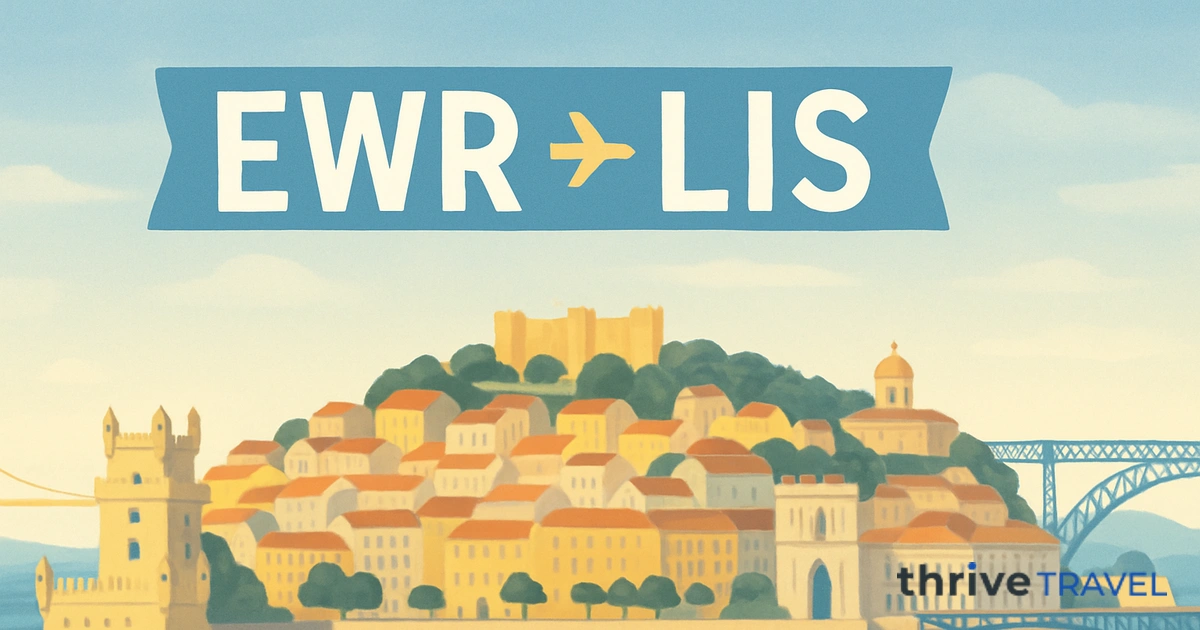
The transatlantic hop between New Jersey and Portugal has become one of the more popular European gateways for travelers leaving the New York metropolitan area. Flights from EWR to LIS typically clock in at around six and a half to seven hours eastbound, with the return leg stretching closer to eight thanks to prevailing headwinds. Most departures leave Newark in the early evening, allowing passengers to sleep through the night and wake up just as the Atlantic gives way to the rolling green hills of central Portugal.
United Airlines operates the bulk of nonstop service on this corridor, with TAP Air Portugal offering a strong alternative and often slightly better economy cabin amenities, including a meal that nods to Portuguese cuisine. Travelers who don't mind a layover can also connect through Lisbon partners in Madrid, Frankfurt, or London, though the time savings of a direct flight are hard to overlook on an overnight journey.
Spring and early autumn tend to be the sweet spots for this route. Between April and June, Lisbon enjoys mild weather, blooming jacarandas, and tourist crowds that haven't yet reached peak intensity. September and October bring warm Atlantic breezes and the tail end of the wine harvest in the surrounding regions. Summer flights book up quickly and command higher fares, while winter offers quieter cabins and a moodier, atmospheric version of the Portuguese capital.
A few practical tips can make the experience smoother. Newark's Terminal B and Terminal C both handle international departures depending on the carrier, so double-check before heading to the airport. Lisbon's Humberto Delgado Airport sits unusually close to the city center, meaning you can be sipping a bica in Bairro Alto within thirty minutes of clearing customs. Passport control can move slowly during morning arrival banks, so patience helps. Travelers should also note that EU entry requirements occasionally shift, and the ETIAS authorization is expected to factor into future trips.
What makes the Newark to Lisbon route genuinely interesting is its role as a soft landing into Europe. Lisbon is walkable, affordable by Western European standards, and serves as a launching point for onward travel to Porto, the Algarve, the Azores, or Madeira. Many travelers use the city as a first stop before continuing deeper into the continent, while others come specifically for the seafood, the fado music, and the tiled facades that define its character. For an overnight flight, few destinations reward the early morning arrival quite so generously.