

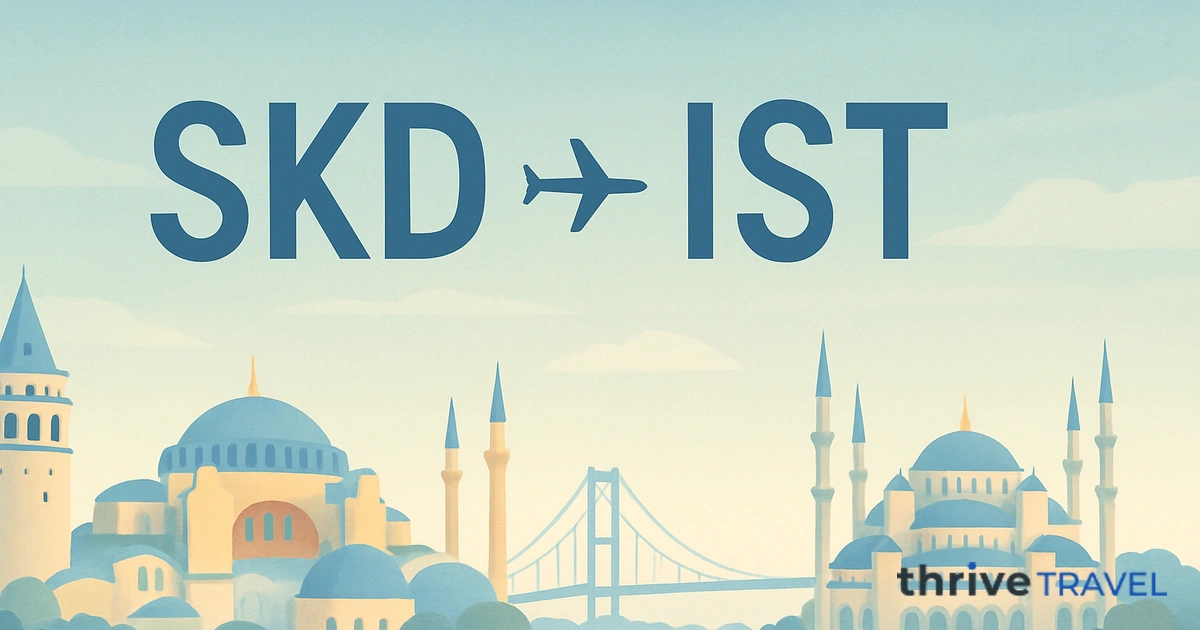
Few air routes carry as much historical weight as the connection between Samarkand and Istanbul. Once linked by camel caravans along the Silk Road, these two cities are now joined by a direct flight that spans roughly four hours, transporting travelers from the turquoise domes of Registan Square to the minarets rising above the Bosphorus. For many visitors, this journey marks the beginning of a deeper exploration of Central Asian and Anatolian heritage.
Turkish Airlines operates most services on this route, offering daily or near-daily departures from Samarkand International Airport (SKD) to Istanbul Airport (IST). The aircraft is typically a narrow-body Airbus, and the cabin experience tends to be smooth, with a hot meal and complimentary beverages served despite the relatively short duration. Uzbekistan Airways occasionally appears on schedules as well, though connectivity through Istanbul Airport's vast global network makes Turkish Airlines the dominant carrier here.
The best time to fly from Samarkand to Istanbul depends on what you hope to find at the other end. Spring, particularly April and May, is widely considered ideal, as temperatures in both cities remain mild and gardens come into bloom. September and October offer similar comfort, with fewer crowds at major attractions like the Hagia Sophia and the Grand Bazaar. Winter flights can be noticeably cheaper, though Istanbul's drizzle and Samarkand's cold mornings require warmer layers than many travelers expect.
Departures from SKD usually take place in the early morning or late evening, which means arriving in Istanbul with a full day ahead or settling in for a quiet night near the airport. Travelers should allow extra time at Samarkand's airport, where facilities are smaller and queues can move slowly during peak season. On arrival at IST, the scale shifts dramatically — Istanbul Airport is one of the largest in the world, and reaching the city center via the M11 metro line or a Havaist bus typically takes 45 minutes to an hour.
A few practical tips can smooth the experience. Carry a printed copy of any onward bookings, as immigration officers occasionally ask for them. Cash in Turkish lira is useful upon arrival, though card payments are widely accepted. If time allows, consider a stopover rather than a quick transit; Istanbul rewards even a 24-hour visit. What makes this route particularly compelling is the cultural symmetry: leaving a city of Timurid splendor and landing in a former Ottoman capital, travelers experience a continuity of architecture, cuisine, and craftsmanship that few air corridors can match.