

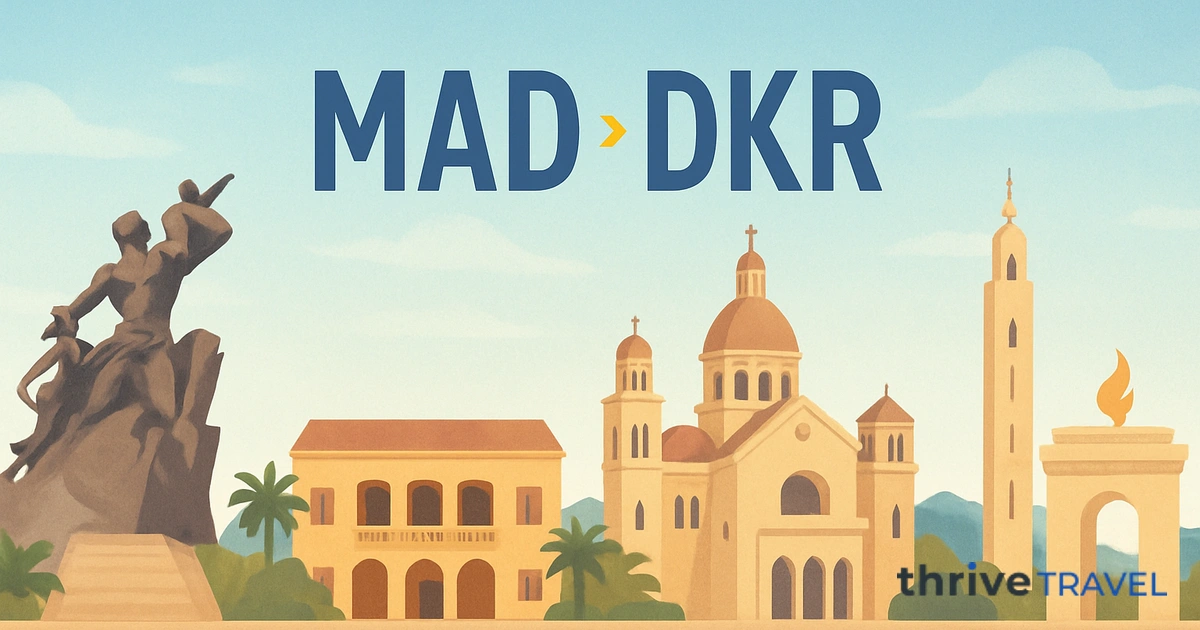
The route from Madrid to Dakar connects two vibrant capitals separated by roughly 3,500 kilometers, bridging the Iberian Peninsula with the westernmost tip of mainland Africa. It is a journey that takes approximately five to six hours, offering travelers a surprisingly quick transition between European and West African cultures.
Several airlines serve this corridor, with Iberia being a prominent carrier offering direct flights. Air Senegal has also strengthened its presence on this route in recent years, providing nonstop service that makes the trip more convenient than ever. Depending on the time of year and how far in advance you book, you may also find connecting options through hubs like Casablanca or Lisbon with carriers such as Royal Air Maroc and TAP Air Portugal, though a direct flight is always the most comfortable choice for this relatively short hop.
Dakar is a city that rewards the curious traveler. From the bustling markets of Sandaga to the colorful fishing boats lining the shores of Soumbédioune, the Senegalese capital pulses with energy and creativity. The African Renaissance Monument offers sweeping views of the Atlantic coastline, while the island of Gorée, just a short ferry ride away, provides a sobering and essential lesson in the history of the transatlantic slave trade. For food lovers, Dakar's culinary scene is a revelation — thiéboudienne, the national dish of fish and rice, is something every visitor should try at least once.
When planning your trip from Madrid to Dakar, timing matters. The best months to visit Senegal fall between November and May, during the dry season, when temperatures are warm but manageable and rainfall is rare. The wet season, from June to October, brings humidity and heavy downpours that can make sightseeing less pleasant, though this period does offer lush green landscapes and fewer tourists.
A few practical tips are worth noting. Travelers should check visa requirements well ahead of departure, as regulations can change. Yellow fever vaccination certificates are required for entry into Senegal. The local currency is the West African CFA franc, and while credit cards are accepted at larger hotels and restaurants, carrying cash is advisable for markets and smaller establishments. French is the official language, so brushing up on a few basic phrases will go a long way.
This route between Madrid and Dakar represents more than just a flight — it is a doorway to one of Africa's most dynamic and welcoming cities, all within a half-day journey from the heart of Spain.