

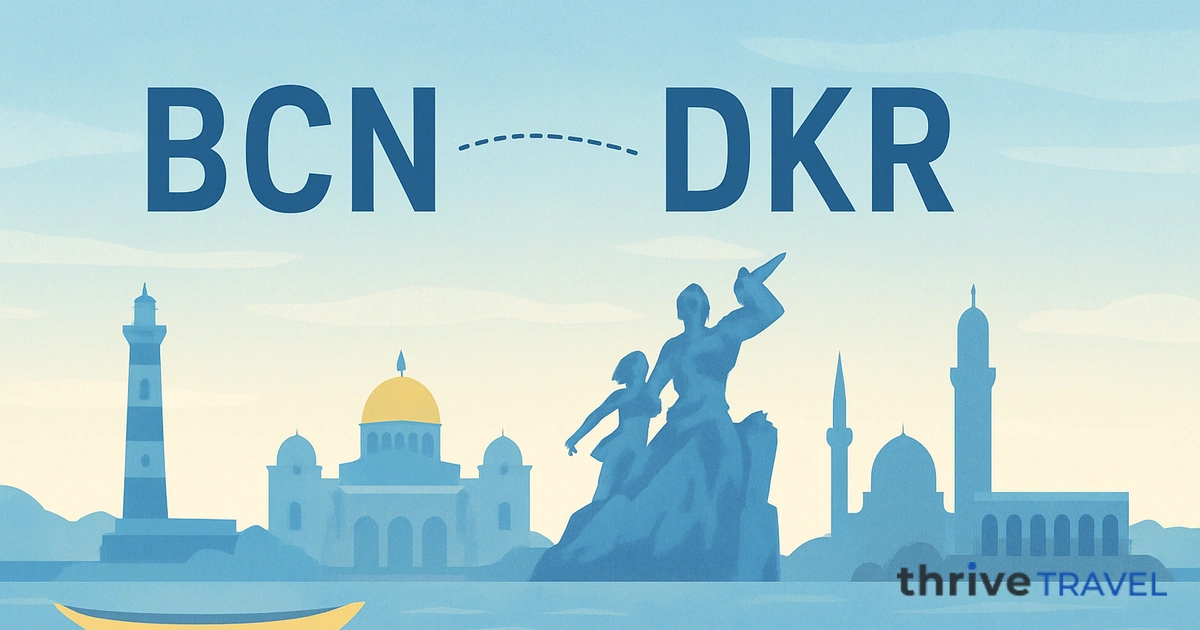
The journey from Barcelona to Dakar bridges the Mediterranean sophistication of Catalonia with the vibrant Atlantic pulse of Senegal, offering a rewarding passage between two very different worlds. Though the cities lie relatively close on the map, direct connections are limited, and most travelers find themselves passing through Madrid, Casablanca, Lisbon, or Paris before continuing south to West Africa. Total travel time typically ranges from six to twelve hours, depending on layover duration and routing.
Airlines commonly serving this corridor include Air Senegal, Royal Air Maroc, Iberia, TAP Air Portugal, and Air France, each offering distinct advantages. Royal Air Maroc's Casablanca hub often provides some of the smoothest connections, while European carriers may appeal to travelers seeking familiar service standards. Air Senegal, when operating direct segments from other European hubs, offers a taste of Senegalese hospitality before you even land at Blaise Diagne International Airport, located about 50 kilometers from central Dakar.
Timing your trip matters. The dry season, running from November through May, is generally considered the most pleasant window for visiting Senegal, with cooler temperatures and minimal rainfall. December and January bring the harmattan, a dusty trade wind that can dim the sunlight but also cools the coast. The rainy season from June to October transforms the landscape into lush green but can complicate travel. European winters push demand upward, so booking a few months ahead usually pays off, particularly for holiday travel.
On board, the flight experience tends to be comfortable but unremarkable, with standard narrow-body or occasionally wide-body aircraft depending on the operator. Meal service, in-flight entertainment, and baggage allowances vary considerably between carriers, so it's worth reviewing the specifics before booking. Travelers should also note that Senegal requires a valid passport with at least six months remaining, and depending on nationality, a visa or yellow fever vaccination certificate may be required.
What makes flying from BCN to DKR genuinely interesting is the cultural contrast that unfolds upon arrival. Dakar's blend of French colonial architecture, Wolof street life, sabar rhythms, and Atlantic seafood markets feels worlds away from Barcelona's Gothic quarter and tapas bars, yet both cities share a maritime soul and an unmistakable love of long, sociable evenings. Currency is the West African CFA franc, and while French is the official language, learning a few Wolof greetings goes a long way with locals. Arriving well-rested, hydrated, and open to a slower rhythm sets the tone for a memorable Senegalese arrival.