

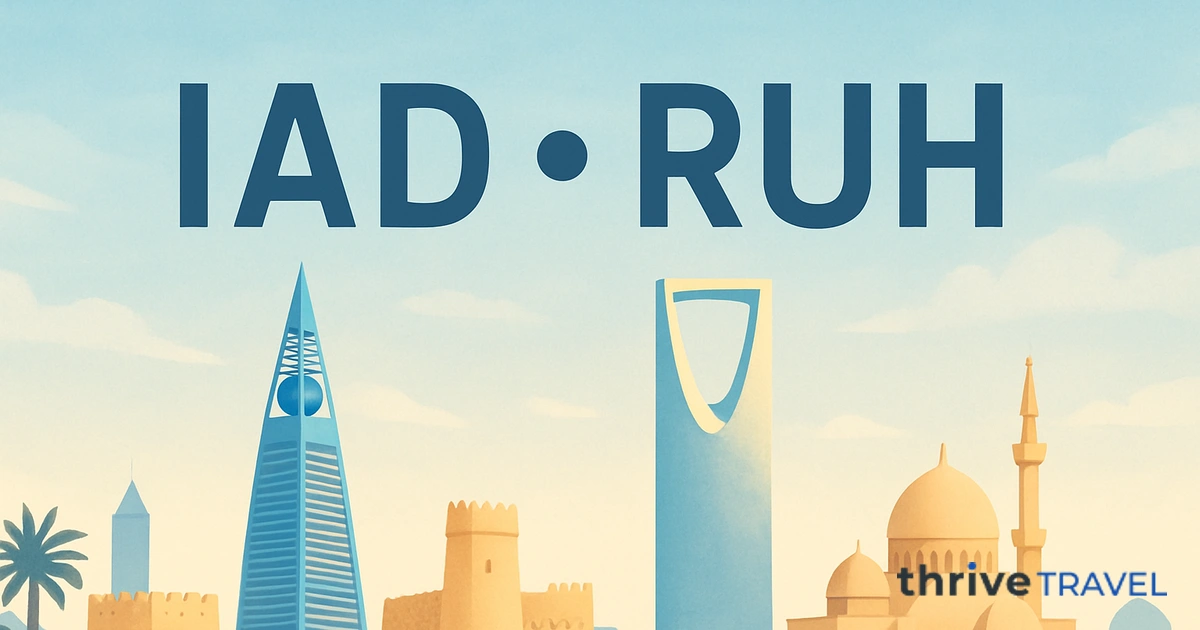
Connecting the political heart of the United States with the rapidly transforming capital of Saudi Arabia, flights from IAD to RUH represent one of the most fascinating long-haul corridors in modern aviation. Whether you're traveling for business, cultural exploration, or to witness Saudi Arabia's ambitious Vision 2030 projects firsthand, this route offers a gateway between two capitals that are shaping global affairs in very different ways.
The journey from Washington Dulles International Airport to King Khalid International Airport in Riyadh covers approximately 6,800 miles and typically takes between 12 and 14 hours on a direct flight. Saudia, the flag carrier of Saudi Arabia, operates nonstop service on this route, making it one of the most convenient options for travelers. Other carriers such as Turkish Airlines, Emirates, and Qatar Airways serve this corridor with one-stop connections through their respective hubs in Istanbul, Dubai, and Doha. These connecting options sometimes offer competitive fares and the added bonus of breaking up an otherwise lengthy flight.
Timing your trip wisely can make a significant difference in comfort. Riyadh experiences extreme summer heat, with temperatures regularly exceeding 110 degrees Fahrenheit from June through August. The most pleasant window for visiting falls between November and February, when daytime highs hover around a comfortable 70 to 80 degrees. This cooler season also coincides with the Riyadh Season entertainment festival, which brings international performances, sporting events, and cultural exhibitions to the city. Spring months can also be enjoyable, though sandstorms occasionally sweep through the region in March and April.
For those flying from IAD to RUH, a few practical tips are worth keeping in mind. Saudi Arabia has significantly relaxed its visa requirements in recent years, with tourist e-visas now available for citizens of many countries, including the United States. Dress codes, while more relaxed than in the past, still lean conservative, particularly outside hotel premises and international districts. The Saudi riyal is pegged to the US dollar, which makes currency exchange straightforward for American travelers.
Riyadh itself has undergone a remarkable transformation. The city's Diriyah district, a UNESCO World Heritage Site, offers a glimpse into the kingdom's founding history, while futuristic developments like the upcoming murabba project signal where the country is heading. The culinary scene has exploded with international and regional restaurants, and new entertainment venues continue to open at a rapid pace.
Whether you choose a direct overnight flight or a connecting itinerary with a layover in the Gulf or Turkey, this route rewards travelers with a destination that feels like it's reinventing itself in real time.