

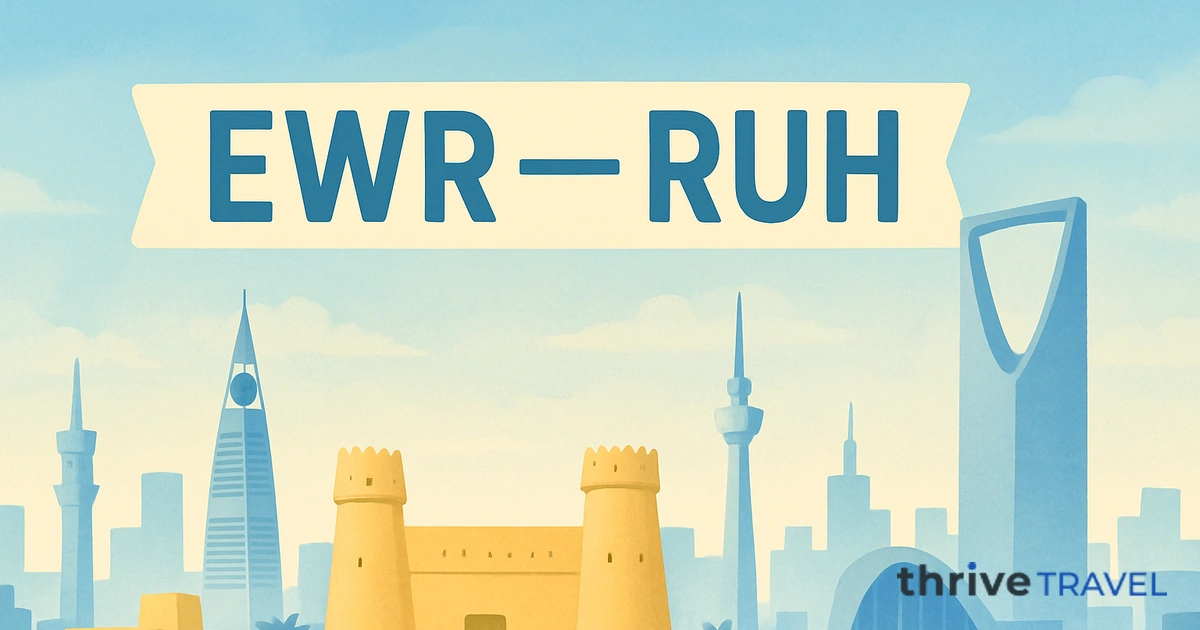
The journey from Newark Liberty International Airport to King Khalid International Airport in Riyadh connects the bustling northeastern United States with the heart of the Arabian Peninsula. It's a long-haul route that typically takes between 12 and 14 hours nonstop, though many travelers opt for one-stop itineraries that route through major European or Gulf hubs. Either way, the trip offers a fascinating transition from the skyscrapers of the New York metropolitan area to the desert capital of Saudi Arabia.
Saudia operates the only direct service on this corridor, with daily flights leaving Newark in the evening and arriving in Riyadh the following afternoon, accounting for the seven- or eight-hour time difference. Travelers seeking alternatives often fly with Lufthansa via Frankfurt, British Airways via London, Turkish Airlines via Istanbul, or Emirates and Qatar Airways through Dubai and Doha respectively. Each option offers a different experience, from European lounges to award-winning Gulf carrier service, so the choice often comes down to schedule, loyalty programs, and how much layover time you can tolerate.
The best time to make this trip depends largely on your tolerance for heat. Riyadh summers, from June through August, regularly exceed 40°C, making outdoor exploration uncomfortable. The cooler months between November and March bring pleasant daytime temperatures in the low 20s, ideal for visiting Diriyah, the National Museum, or Edge of the World rock formations outside the city. Ramadan, which shifts annually on the lunar calendar, also affects daily rhythms, with restaurants closed during daylight and business hours adjusted.
On board, expect a full-service experience regardless of carrier, as airlines competing for this market understand the importance of comfort over such distances. Lie-flat business class is widely available, and economy travelers should pack noise-cancelling headphones, a refillable water bottle, and entertainment for the long stretch over the Atlantic and Europe. Visa requirements have eased considerably in recent years, with most American travelers eligible for an electronic visa, but verifying paperwork before departure remains essential.
What makes the Newark to Riyadh route particularly interesting is its role as a bridge between two distinct business cultures. Energy executives, consultants, and government officials frequent these cabins alongside tourists discovering Saudi Arabia's recently opened heritage sites. Arriving in Riyadh, you'll find a city in rapid transformation, where ultramodern developments rise alongside centuries-old traditions. The flight itself becomes a kind of decompression chamber, preparing travelers for a destination that surprises even the most seasoned international visitor.