

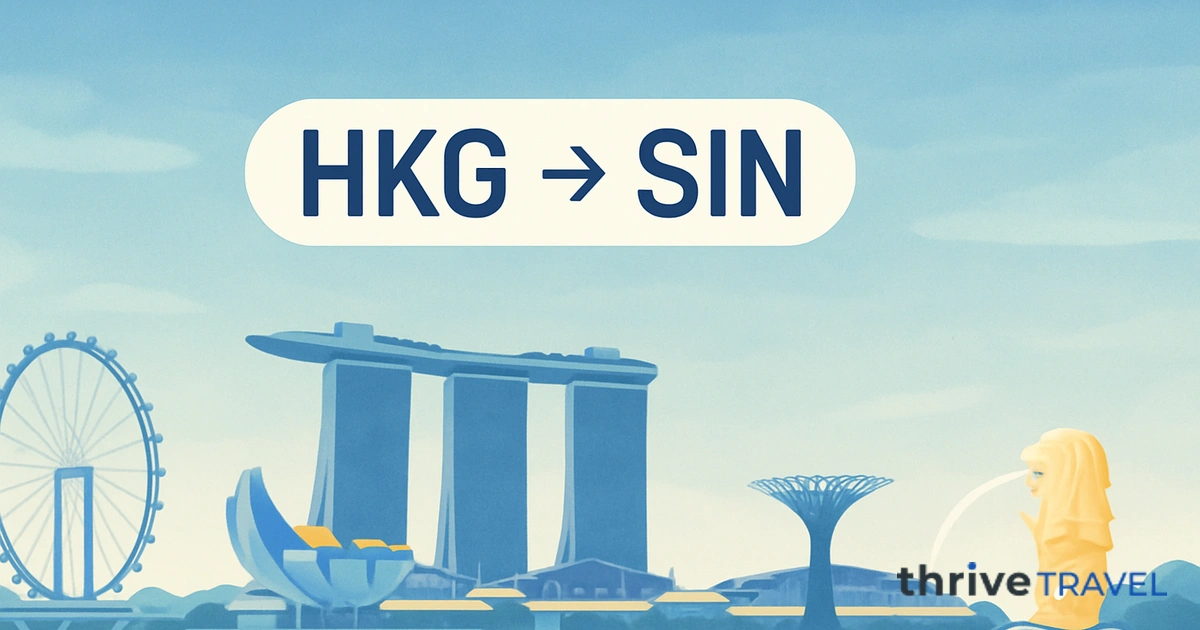
Few routes in Asia are as consistently busy as the corridor connecting Hong Kong to Singapore. Linking two of the region's most prominent financial hubs, this journey attracts business travelers, holidaymakers, and transit passengers moving between East Asia and Southeast Asia. The flight covers roughly 2,570 kilometers and typically takes between three hours and forty minutes and four hours, depending on winds and air traffic over the South China Sea.
Several airlines operate this route with impressive frequency. Cathay Pacific and Singapore Airlines dominate the market with multiple daily services, both offering full-service experiences with hot meals, generous baggage allowances, and lie-flat seats in business class. Budget-conscious travelers often turn to Scoot or HK Express, which provide no-frills options at lower fares. With so many departures spread across the day, finding a suitable time slot is rarely a problem, whether you prefer an early morning flight to maximize your day or a red-eye that lands before breakfast.
Timing your trip matters. The dry season in Singapore runs roughly from February through April, offering pleasant weather with fewer downpours. Hong Kong is at its most comfortable between October and December, when humidity drops and skies clear. Traveling during the monsoon months, particularly June through September, means preparing for sudden tropical showers on both ends, though these rarely disrupt flights significantly. Chinese New Year and the year-end holiday period see fares climb sharply, so booking six to eight weeks ahead is wise if your dates fall in these windows.
The onboard experience is generally smooth, with much of the journey passing over water and open sea. Window seats on the right side heading south often reward passengers with glimpses of the Philippine islands or Borneo on clear days. Both Hong Kong International and Changi are consistently ranked among the world's best airports, so layovers or arrival experiences tend to be efficient and even enjoyable. Changi in particular is worth arriving early to explore, with its indoor waterfall, gardens, and extensive dining options.
A few practical tips: immigration in Singapore is fast for most nationalities thanks to automated gates, but ensure your passport has at least six months of validity. Hong Kong requires no visa for many travelers, though entry policies can shift, so double-check before departure. Consider purchasing a local SIM or eSIM before landing to avoid airport queues.
Whether flown for work or leisure, the Hong Kong to Singapore route remains one of Asia's most reliable and rewarding short-haul journeys.