

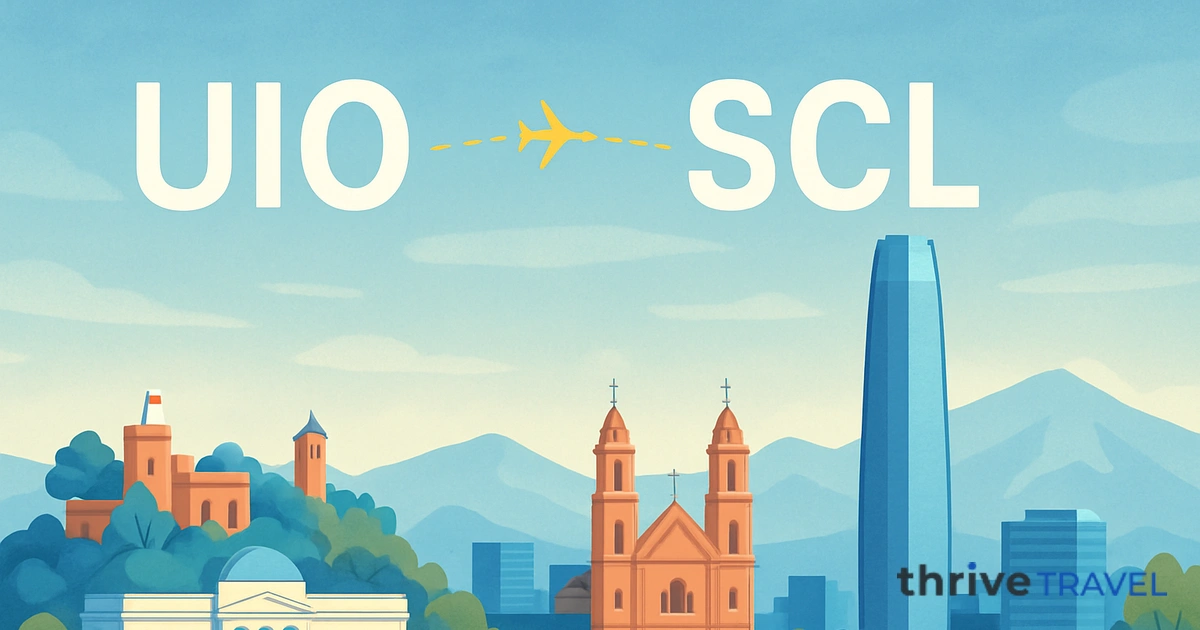
Few air routes in South America capture the continent's geographic drama quite like the journey between Ecuador's mountain capital and Chile's bustling metropolis. Departing from Mariscal Sucre International Airport, located in the Andean highlands east of Quito, travelers embark on a flight that traces the spine of the Andes for roughly five hours before touching down at Santiago's Arturo Merino Benítez International Airport.
Most flights from Quito to Santiago involve a stopover, with Lima being the most common connection point. LATAM dominates this corridor, often pairing its Ecuadorian and Chilean operations with a brief layover in Peru. Avianca offers alternatives via Bogotá, while Copa Airlines routes passengers through its Panama City hub. Nonstop service is rare, so building in extra time for the connection is wise, especially when changing terminals or clearing transit immigration.
The flying experience itself can be visually rewarding. On clear days, window seats on the left side heading south reveal a near-constant panorama of snow-capped volcanoes, arid coastal deserts, and eventually the green central valleys of Chile. The descent into Santiago, framed by the towering Andes to the east, is among the more memorable arrivals on the continent.
Timing matters when planning this trip. The Southern Hemisphere shoulder seasons, roughly March to May and September to November, tend to offer the most comfortable weather at both ends. Santiago summers from December through February are warm and dry, ideal for combining the city with trips to Patagonia or the wine country, though fares rise sharply around the holidays. Winter months bring ski season to the Chilean Andes, drawing a different kind of traveler. Quito, sitting on the equator, stays mild year-round, though its rainy months from October through May can occasionally affect departures.
A few practical tips smooth the journey. Quito's airport sits at over 2,400 meters, and altitude can affect passengers before they even board, so hydration helps. Chile enforces strict agricultural controls on arrival; fresh fruit, seeds, and certain dairy products must be declared. Currency changes from US dollars to Chilean pesos, and travelers will notice the price jump in restaurants and taxis upon arrival.
What makes this route particularly interesting is the cultural contrast bookending the flight. You leave a colonial Andean city steeped in indigenous and Spanish heritage and arrive in a cosmopolitan capital that feels closer to Buenos Aires or Madrid in rhythm. For travelers piecing together a longer South American itinerary, the Quito to Santiago corridor remains one of the continent's most rewarding aerial bridges.