

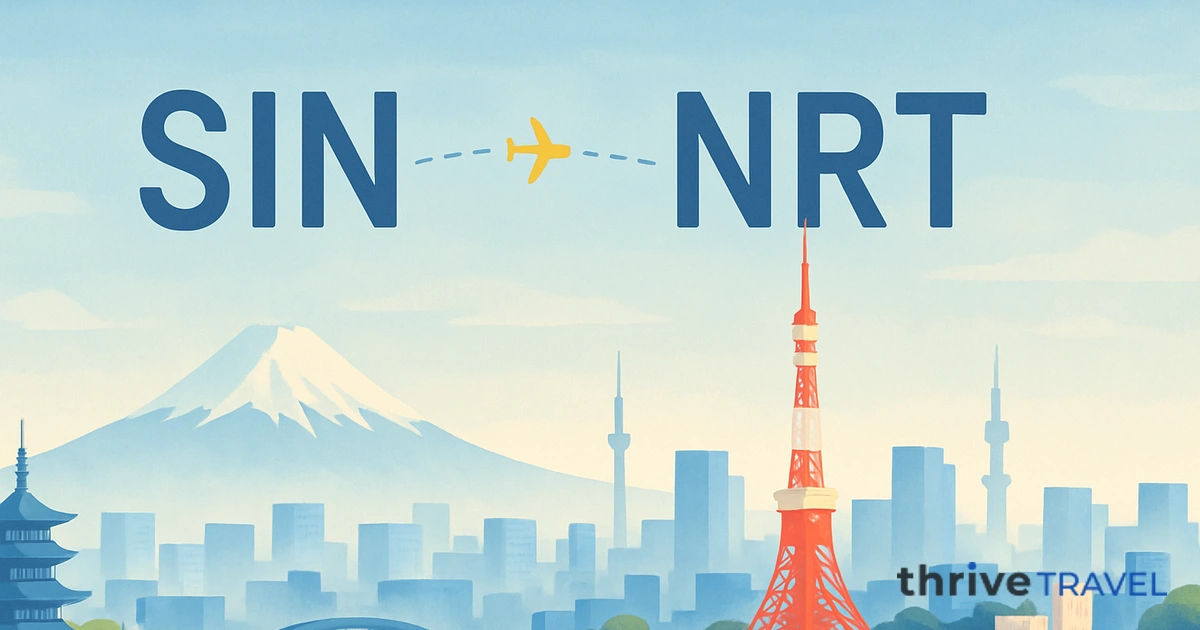
The journey from Singapore to Tokyo Narita is one of Asia's most popular long-haul routes, connecting the tropical hub of Changi with the sprawling metropolis of Japan's capital. Covering roughly 5,300 kilometers, the flight typically takes between six and a half and seven and a half hours, making it comfortable enough for a day trip in the sky and long enough to catch a proper rest or a couple of films.
Several airlines operate this corridor, giving travelers a broad choice depending on budget and preference. Singapore Airlines and All Nippon Airways offer full-service experiences with generous meal options, while Japan Airlines is known for its refined cabin service and reliable schedules. Budget-conscious flyers often turn to Scoot, Jetstar Asia, or ZIPAIR for lower fares, though amenities are more limited. Most departures leave Changi in the morning or late at night, arriving at Narita either in the afternoon or early morning, which suits travelers heading straight into central Tokyo via the Narita Express or Keisei Skyliner.
Timing your trip can shape the experience significantly. Spring, particularly late March through early April, is famously beautiful thanks to the cherry blossom season, though flights and hotels fill up quickly. Autumn, from mid-October to late November, brings crisp weather and striking foliage, and is often considered the most pleasant time to visit. Summer can be hot and humid in Tokyo, while winter offers clear skies and the chance to combine city sightseeing with nearby ski destinations.
The route from Singapore to Narita is interesting not just as a transit line but as a cultural bridge. The contrast between Singapore's compact, tropical efficiency and Tokyo's vast, seasonal rhythm is part of what makes the journey memorable. Onboard, expect a mix of Japanese and Southeast Asian cuisine, and if you fly with a Japanese carrier, you may already feel immersed in the destination before landing.
A few practical tips can smooth the experience. Changi Airport is worth arriving early for, thanks to its gardens, food options, and Jewel complex. On arrival at Narita, allow time for immigration during peak hours, and consider purchasing a Suica or PASMO card at the airport for seamless train travel. If your itinerary allows, compare fares into Haneda as well, since it sits closer to central Tokyo, though Narita often has more competitive pricing and wider flight availability.
Whether it's your first visit or a familiar route, flying between these two cities remains a rewarding gateway into East Asia.