

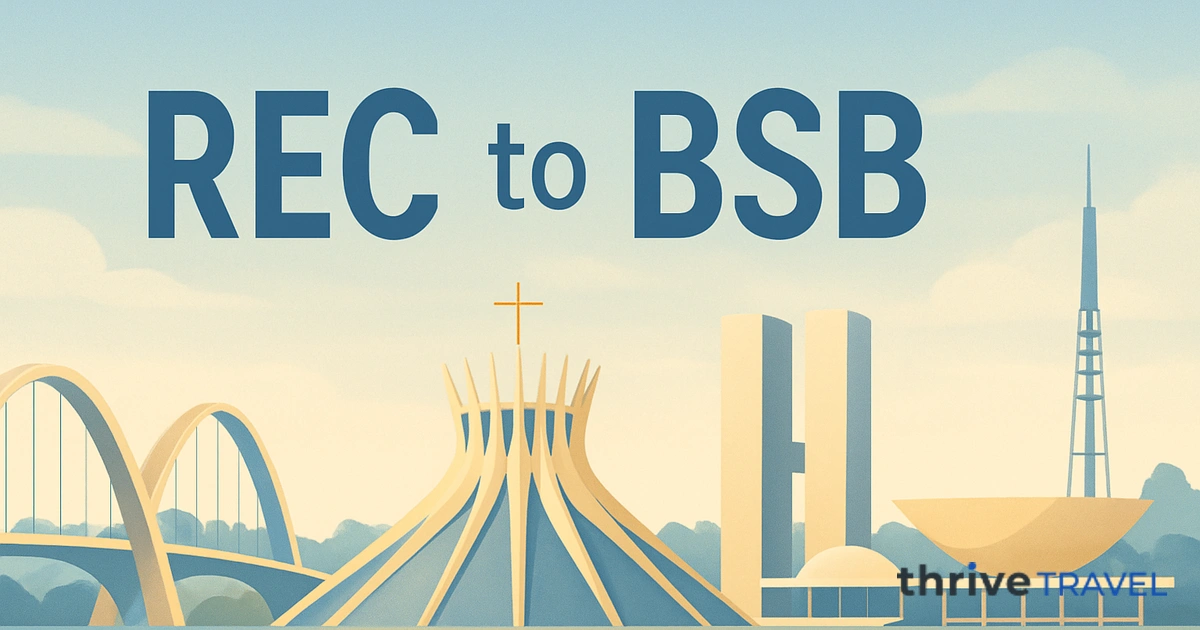
The journey from Recife to Brasília connects two very different faces of Brazil: the sun-soaked Atlantic coast of Pernambuco and the modernist, planned capital rising from the central plateau. Covering roughly 2,000 kilometers, the flight typically takes between two hours and forty minutes and three hours, depending on winds and whether the route is direct or includes a stop in cities like São Paulo or Salvador.
Several Brazilian carriers operate this corridor, with LATAM, GOL, and Azul offering the most frequent schedules. Direct flights are common in the morning and early evening, while connecting itineraries can be useful for travelers looking for more flexibility with baggage or seat selection. Guararapes International Airport in Recife is compact and generally efficient, while arrival at Brasília's Presidente Juscelino Kubitschek Airport places you within a short drive of the ministries, embassies, and iconic Niemeyer landmarks that define the capital.
The best time to make this trip depends on what you want to experience. From September to November, Brasília enjoys warm days and the return of green landscapes after the dry season, making it pleasant for sightseeing. Recife, in turn, is at its liveliest between December and February, when Carnival preparations begin and coastal weather peaks. Travelers heading inland during the June to August dry season should be prepared for very low humidity in the capital, a stark contrast to Pernambuco's coastal air.
On board, the flight is usually smooth, crossing the vast semi-arid sertão before revealing the geometric grid of Brasília from the window. Sitting on the left side of the aircraft on approach often rewards passengers with views of Lake Paranoá and the city's distinctive airplane-shaped layout. Meal service is limited on domestic Brazilian flights, so bringing a snack or purchasing something at the terminal is a good idea.
A few practical tips make the Recife to Brasília journey easier. Arrive at least ninety minutes before departure, as security lines can grow during peak travel windows around holidays and school breaks. Check baggage rules carefully, since basic fares often exclude checked luggage. If you have time, consider a stopover in Salvador or São Paulo to break up the trip and explore another region.
What makes this route interesting is the cultural shift it represents. In just a few hours, you move from frevo rhythms, colonial architecture, and ocean breezes to a UNESCO-listed capital built from scratch in the 1950s. Few domestic flights in Brazil offer such a dramatic contrast between origin and destination.