

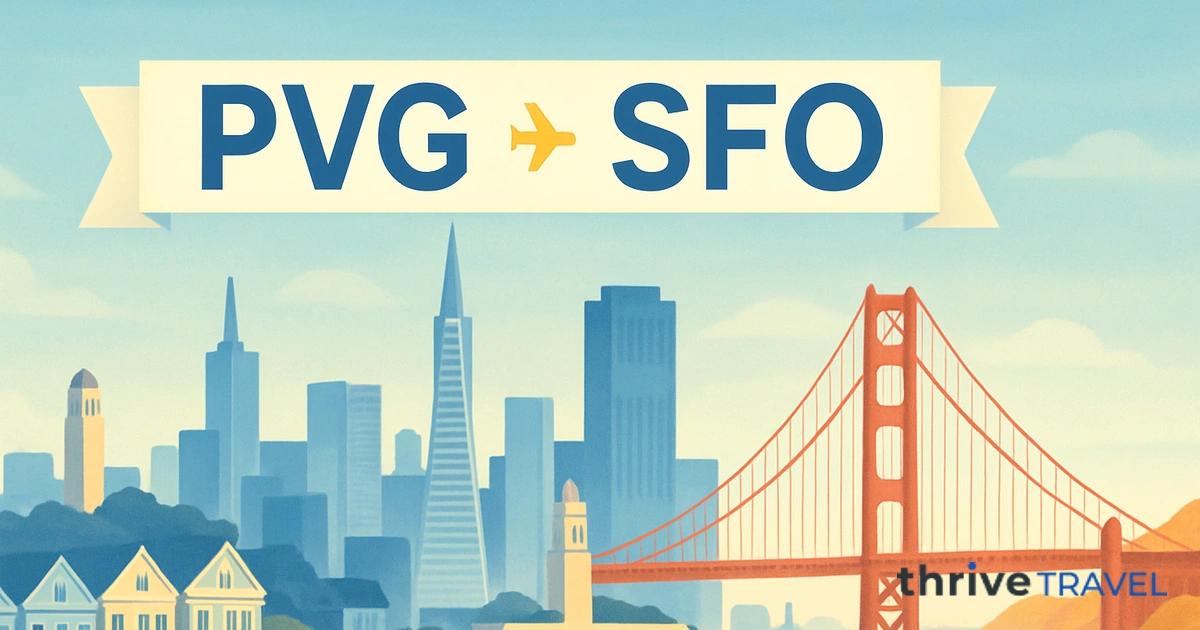
The transpacific journey from Shanghai Pudong to San Francisco is one of the most significant air corridors connecting China and the United States. Spanning roughly 9,500 kilometers across the Pacific Ocean, this route typically takes between 11 and 12 hours eastbound, though the return westbound leg can stretch closer to 14 hours due to prevailing jet stream patterns. It is a route steeped in cultural and commercial importance, linking two of the world's most dynamic metropolitan areas.
Several major carriers operate nonstop service between the two cities. United Airlines maintains a strong presence on this corridor, given that San Francisco serves as one of its primary hubs. China Eastern Airlines and Air China also offer direct flights, providing travelers with a range of options across different price points and service styles. For those open to connections, carriers like Korean Air, ANA, and Cathay Pacific offer one-stop itineraries through Seoul, Tokyo, or Hong Kong, sometimes at lower fares and with the bonus of exploring an additional city.
Seasonal timing matters when planning this trip. Spring and fall tend to offer the most pleasant weather on both ends, with San Francisco enjoying its warmest days in September and October rather than the foggy summer months that often surprise first-time visitors. Shanghai is at its most comfortable from late March through May, when cherry blossoms dot the city and humidity remains manageable. The weeks surrounding Chinese New Year in January or February see a significant spike in demand and fares, so booking well in advance is advisable during that period.
On the plane itself, experienced travelers recommend a few strategies for managing the long flight. Staying hydrated is essential, as cabin air is notoriously dry on extended overwater routes. Noise-canceling headphones, a good neck pillow, and compression socks can make the difference between arriving refreshed and arriving exhausted. Most airlines serving flights from PVG to SFO offer personal entertainment systems with extensive libraries of both Chinese and English-language films, which helps pass the time.
Upon arrival in San Francisco, international passengers should budget at least 90 minutes for customs and immigration processing, particularly during peak afternoon hours when multiple transpacific flights land in quick succession. Global Entry holders enjoy a considerable advantage here. The airport connects easily to downtown via BART, the regional rail system, making the transition from plane to city remarkably straightforward.
What makes this route particularly compelling is the contrast between destinations. Shanghai's futuristic skyline and relentless energy give way to San Francisco's Victorian charm and laid-back coastal atmosphere. Whether traveling for business or leisure, the journey between these two iconic cities remains one of the most rewarding long-haul experiences available to modern travelers.