

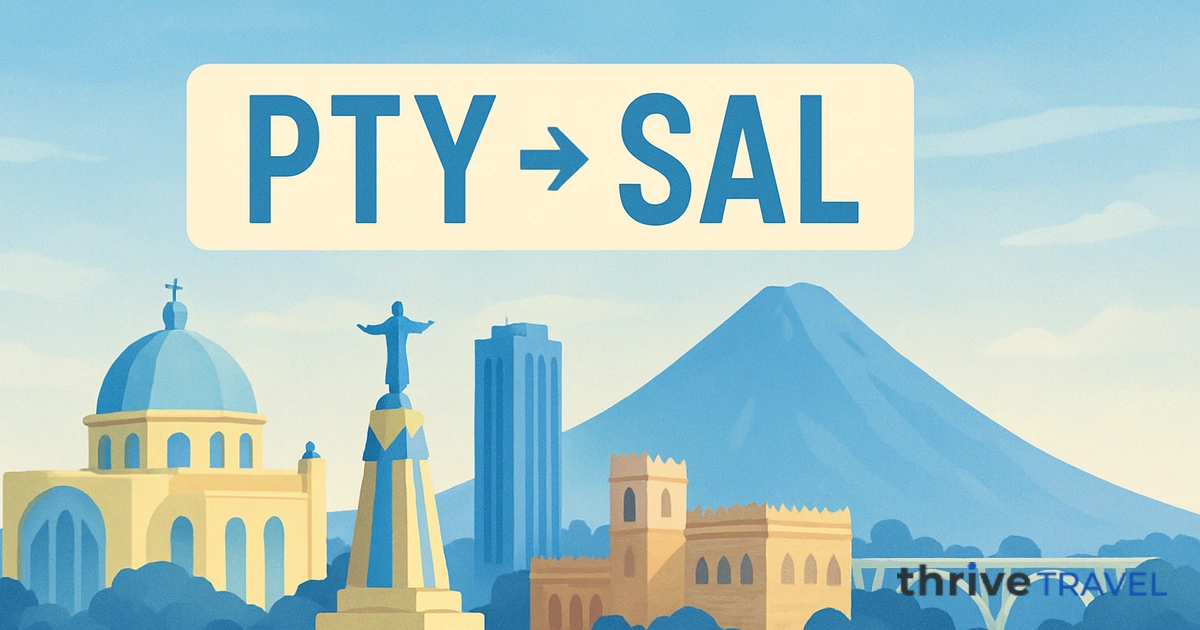
The short hop between Panama City and San Salvador is one of Central America's busier corridors, linking two important business and tourism hubs. The flight itself usually lasts just over two hours, making it one of the easier connections in the region. Despite the brief duration, the journey offers a glimpse of the Pacific coastline and the volcanic spine of Central America from above, especially on clear afternoons when the cone of San Salvador volcano comes into view on descent.
Most departures leave from Tocumen International Airport, a modern hub that serves as a major gateway for connections across the Americas. Arrivals at Monseñor Óscar Arnulfo Romero International Airport, located about 40 kilometers southeast of the Salvadoran capital, are typically smooth, with immigration moving quickly for travelers from neighboring countries. Copa Airlines dominates this route, leveraging its Panama hub to offer multiple daily frequencies. Avianca also operates services with onward connections, and travelers occasionally find seasonal options through other regional carriers.
The dry season, running roughly from November through April, is generally considered the most comfortable time to fly into El Salvador. Skies are clearer, surf conditions along the Pacific coast peak, and inland destinations like Suchitoto and the Ruta de las Flores are at their best. The green season, from May to October, brings dramatic afternoon storms but also lush landscapes and fewer crowds. Flights from Panama to San Salvador remain steady year-round, though prices tend to climb around Semana Santa and the December holidays when Salvadorans living abroad return home.
Travelers should keep a few practical points in mind. Tocumen is a large airport with long walking distances between gates, so allow extra time if you are connecting from another flight. Both countries use the U.S. dollar, which simplifies budgeting and removes the usual currency exchange hassle. Carry-on policies on regional carriers can be stricter than expected, so weighing your bag before arriving at the airport is wise. Onboard, expect a light snack and beverage service on Copa, while Avianca's offering varies by fare class.
What makes this corridor interesting is how it stitches together two very different sides of Central America. Panama leans cosmopolitan, with its canal, skyline, and banking culture, while San Salvador feels more grounded in tradition, surrounded by volcanoes, colonial towns, and a Pacific coast increasingly known among surfers. For business travelers it is a routine commute; for tourists, it is a gateway to a country that rewards curiosity well beyond its capital.