

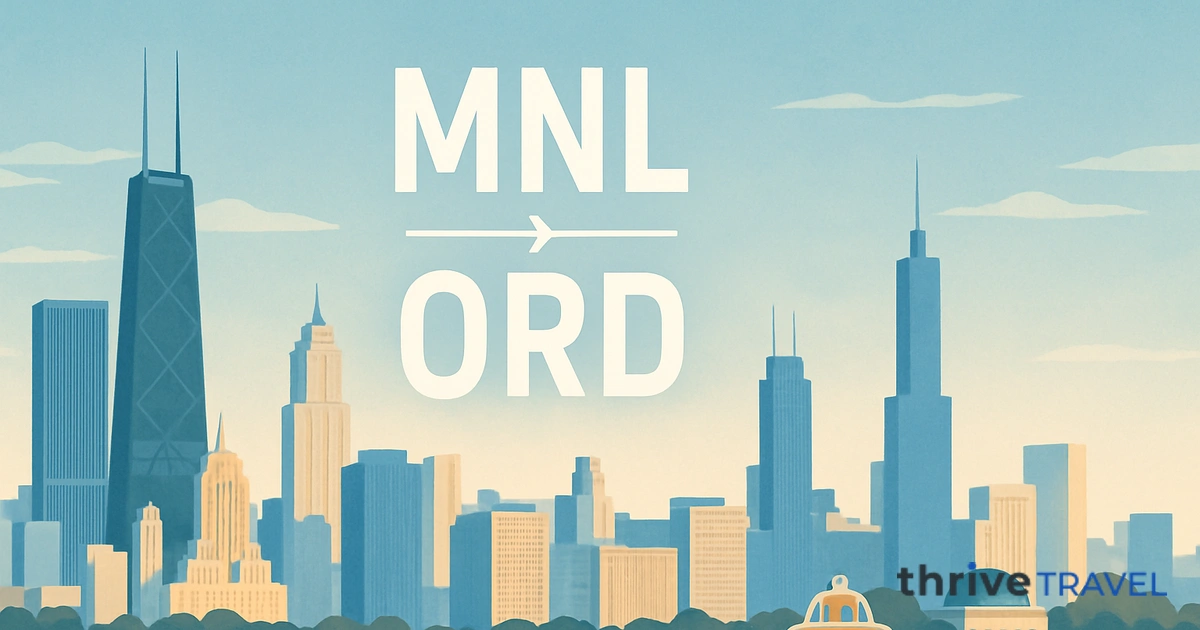
The journey from Manila to Chicago is one of the longest transpacific routes connecting Southeast Asia with the American Midwest, covering roughly 8,500 miles and typically requiring at least one stopover. For the millions of Filipino Americans who call the Chicago metropolitan area home, this route represents a vital lifeline between two worlds, making it one of the most culturally significant corridors across the Pacific.
Direct nonstop flights between Manila and Chicago are not currently available, so travelers will generally connect through major hub cities. Philippine Airlines offers convenient one-stop options through various Asian gateways, while carriers like EVA Air route passengers through Taipei, Korean Air through Seoul, and Japan Airlines through Tokyo Narita. U.S.-based airlines such as United frequently connect through their Pacific hubs in San Francisco or Los Angeles. Total travel time ranges from roughly 18 to 24 hours depending on the layover duration, so choosing a connection with a reasonable stopover window can make a meaningful difference in how you feel upon arrival.
Timing your trip wisely matters on both ends. Manila's dry season, from November through April, is the most pleasant period to visit the Philippines. Meanwhile, Chicago shines brightest between May and October when warm weather brings the city's famous lakefront, outdoor festivals, and architectural boat tours to life. Traveling during the winter holiday season is popular among Filipino families reuniting for celebrations, though fares tend to spike in December. Booking well in advance, ideally two to three months ahead, generally helps secure more reasonable prices during peak periods.
For such a lengthy journey, comfort preparation goes a long way. Compression socks, a quality neck pillow, and staying well-hydrated are small investments that pay off enormously. If your layover city allows it, consider breaking the trip with an overnight stay. Cities like Tokyo or Seoul offer efficient transit hotel options near the airport, turning an exhausting marathon into a more manageable two-day adventure.
Flying from Manila to Chicago also means navigating a significant time zone shift. The Windy City sits 13 or 14 hours behind the Philippines depending on daylight saving time, so jet lag can be particularly stubborn. Arriving in the evening local time and resisting the urge to nap until a proper bedtime helps your body clock adjust more quickly.
What makes this route special is its human dimension. It connects one of Asia's most vibrant capitals with a city that boasts one of the largest and most established Filipino communities in the United States. Whether you are visiting family, exploring Chicago's world-class dining and music scene, or heading to Manila for business or vacation, this transpacific corridor carries stories of home, ambition, and belonging in every seat on every flight.