

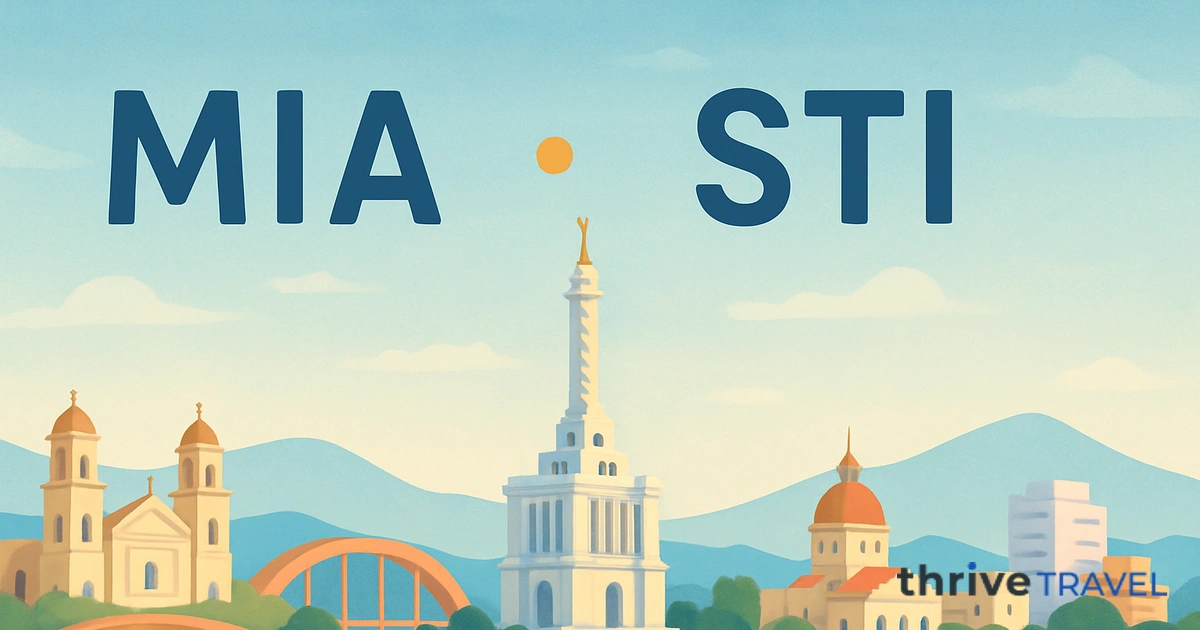
The short hop between South Florida and the northern heart of the Dominican Republic has become one of the Caribbean's busiest air corridors, and for good reason. Santiago de los Caballeros, tucked into the fertile Cibao Valley, offers a different flavor of Dominican life than the beach resorts of Punta Cana or the colonial streets of Santo Domingo. For many travelers, this is a route home; for others, it's the gateway to tobacco country, mountain retreats in Jarabacoa, and the cultural pulse of the DR's second city.
Flights from Miami to STI typically last around two and a half hours, making it one of the more relaxed international journeys departing from MIA. American Airlines dominates the route with multiple daily departures, while JetBlue offers a competitive alternative with its roomier economy cabin. Arajet and other regional carriers have also expanded service in recent years, giving passengers more flexibility with schedules and fares. Most flights land at Cibao International Airport (STI), a compact and efficient facility that rarely feels overwhelming, even during peak arrival waves.
The best time to fly depends on what you're after. December through March brings dry weather and pleasant temperatures in the Cibao Valley, though fares climb sharply around the holidays as the Dominican diaspora returns home for family gatherings. Late April through June offers a sweet spot of good weather and lighter crowds. Hurricane season stretches from June to November, and while direct impacts on Santiago are rare due to its inland location, occasional storms can disrupt schedules.
A few practical tips make the journey smoother. Miami International is vast, so allow extra time to navigate between terminals, especially if you're connecting. Immigration lines at STI move quickly compared to larger Dominican airports, but keep your tourist card handy along with proof of onward travel. If you're bringing gifts or electronics for family, be aware of Dominican customs limits to avoid unexpected duties on arrival.
What makes the Miami to STI corridor genuinely interesting is the cultural exchange baked into every flight. You'll often hear passengers switching effortlessly between Spanish and English, catching up on family news, or comparing notes on where to find the best mangú in either city. Once you land, Santiago rewards curious travelers with its monument-topped hilltop, cigar factory tours in nearby Tamboril, and easy access to the cool mountain air of the Cordillera Central. It's a route that feels less like tourism and more like a bridge between two connected worlds.