

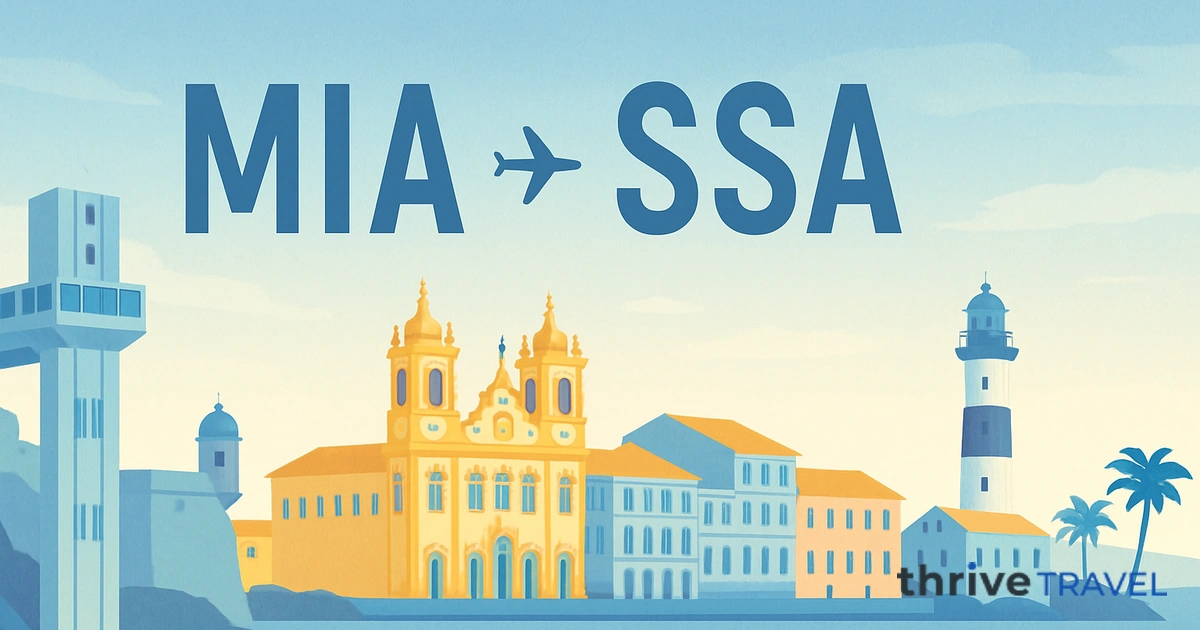
The flight route from Miami to Salvador connects two vibrant coastal cities that share a deep love for music, dance, and warm ocean breezes. Salvador da Bahia, the historic capital of Brazil's northeastern coast, is widely regarded as the cultural heart of the country, and arriving there from Miami feels like stepping into a world where African, Portuguese, and indigenous traditions blend seamlessly into something truly extraordinary.
Flights from MIA to SSA typically involve a connection, most commonly through São Paulo's Guarulhos Airport or Rio de Janeiro's Galeão International. LATAM Airlines and GOL are the primary carriers handling the Brazilian domestic leg, while American Airlines and LATAM often operate the international segment from Miami. Total travel time ranges from approximately 12 to 18 hours depending on layover duration. Occasionally, seasonal or charter options reduce connection times, so flexibility with travel dates can make a noticeable difference in overall journey length.
Salvador's climate is tropical year-round, with temperatures hovering between 75 and 90 degrees Fahrenheit. The dry season from September through March tends to attract the most visitors, offering sunny skies ideal for exploring the cobblestone streets of the Pelourinho district or lounging along the golden sands of Praia do Farol da Barra. February and March bring Carnival, and Salvador's celebration rivals that of Rio in energy and scale. In fact, many locals argue it surpasses it. The streets fill with blocos, massive roving music trucks surrounded by thousands of dancers moving to axé, samba-reggae, and pagode rhythms.
Travelers flying from Miami to Salvador should be aware of a few practical details. Brazilian visa requirements have changed in recent years, so checking the latest entry rules before booking is essential. The Brazilian real fluctuates considerably against the dollar, which can make Salvador remarkably affordable during favorable exchange periods. Once on the ground, ride-hailing apps work well throughout the city, and the airport is located about 30 kilometers from the historic center.
What makes this route particularly compelling is the cultural depth awaiting visitors. Salvador was the first capital of colonial Brazil and the primary port of entry for enslaved Africans, a history that profoundly shapes its cuisine, religion, and artistic expression. From the aromatic acarajé sold by Baianas in traditional white lace dresses to the mesmerizing movements of capoeira performed in public squares, every corner of the city tells a story. For Miami residents already attuned to Latin American and Caribbean rhythms, Salvador offers a familiar warmth with an entirely different cultural dimension worth discovering.