

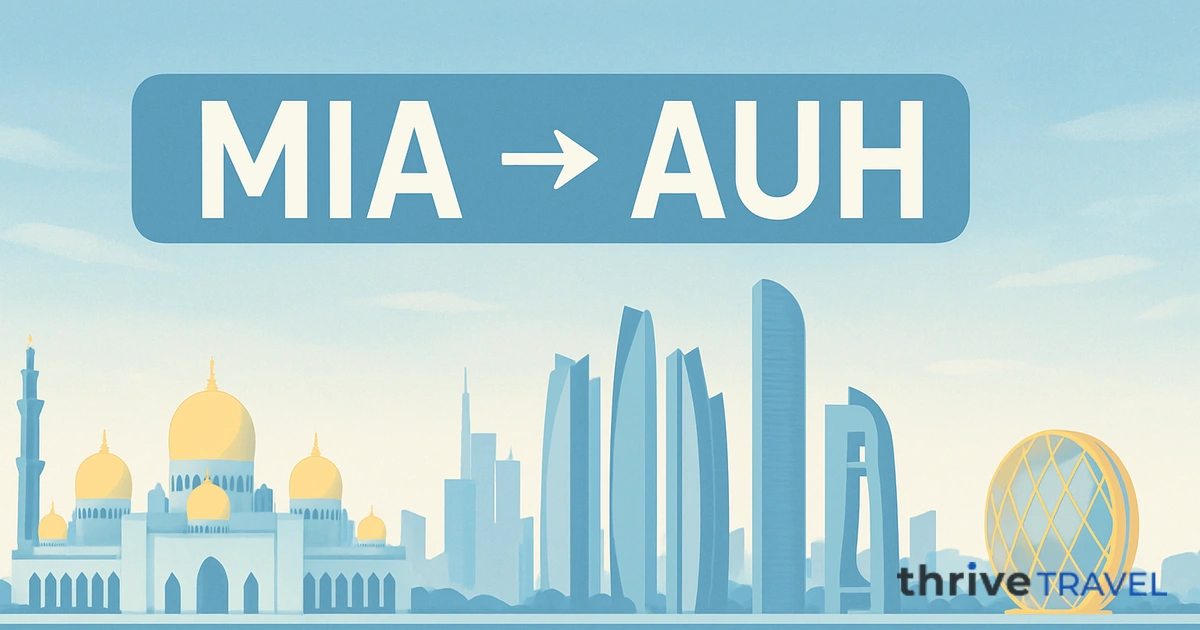
Connecting the vibrant energy of South Florida with the gleaming capital of the United Arab Emirates, the route from Miami to Abu Dhabi spans roughly 7,500 miles and offers travelers a fascinating journey between two cities that share a love for luxury, waterfront living, and ambitious architecture. It is one of the longer nonstop routes available from the eastern United States, with flight times averaging around 13 to 14 hours eastbound and slightly longer on the return due to prevailing winds.
Etihad Airways operates the most prominent nonstop service on this corridor, offering direct flights that make the journey remarkably convenient compared to connecting through European hubs. Travelers who prefer other carriers can also find options with one stop, commonly routing through London, Frankfurt, or Doha on airlines like British Airways, Lufthansa, or Qatar Airways. Each connection adds time but can sometimes open up interesting stopover opportunities for those who enjoy breaking up a long-haul trip.
When it comes to timing your visit, Abu Dhabi is best experienced between October and April, when daytime temperatures hover in the comfortable range of 75 to 85 degrees Fahrenheit. The summer months bring intense heat that regularly exceeds 110 degrees, which can limit outdoor exploration considerably. The cooler season also coincides with Abu Dhabi's cultural calendar, including the Formula One Grand Prix in November and various art and food festivals that bring the city to life.
On board, passengers flying from Miami to Abu Dhabi should prepare for the long duration by staying hydrated, moving around the cabin periodically, and adjusting sleep schedules early if possible. The time difference is nine hours ahead, so jet lag can be significant. Many experienced travelers recommend arriving in the evening local time so the body can ease into the new rhythm with a night of sleep.
Abu Dhabi itself rewards visitors with a compelling mix of modern spectacle and cultural depth. The Sheikh Zayed Grand Mosque is one of the most breathtaking religious sites in the world, while the Louvre Abu Dhabi offers a world-class art collection beneath its iconic dome. Beyond the city, the desert dunes of the Empty Quarter and the mangrove forests of Jubail Island provide unexpected natural beauty.
For Miami residents and visitors, this route opens a direct line to the Middle East without the need for a positioning flight to New York or Washington. Whether traveling for business, leisure, or a combination of both, the connection between these two sun-soaked cities continues to grow in popularity as Abu Dhabi solidifies its reputation as a global destination worth experiencing firsthand.