

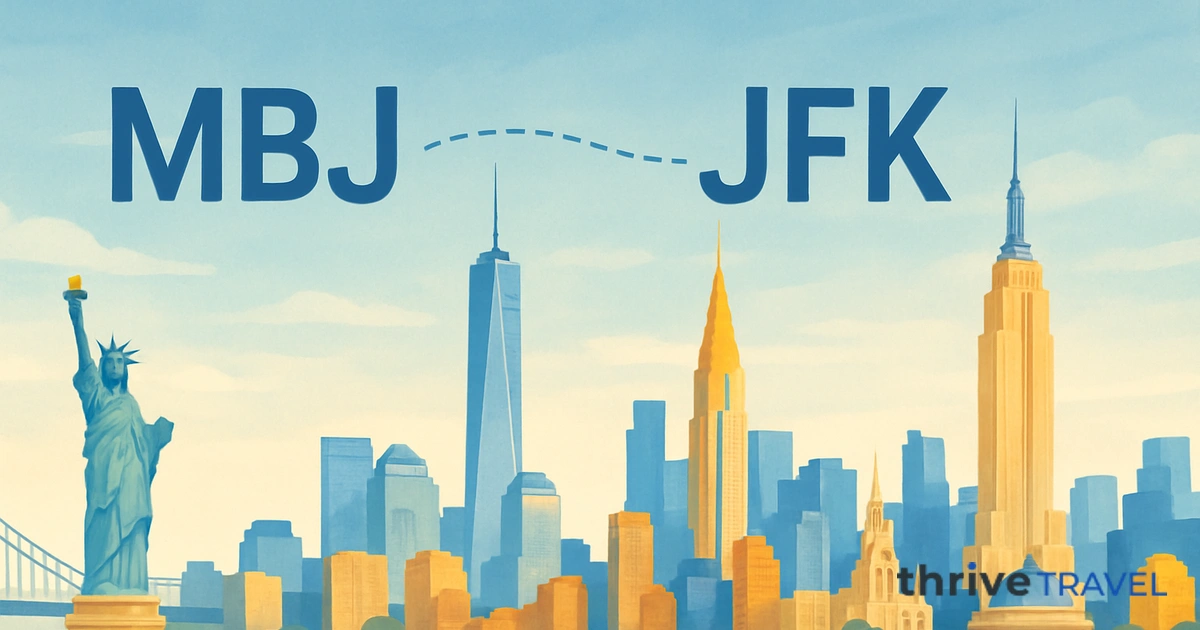
The journey from Montego Bay to New York is one of the Caribbean's most well-traveled corridors, linking the laid-back energy of Jamaica's north coast with the relentless rhythm of New York City. For many passengers, the route is more than a transit between two airports; it is a transition between two entirely different worlds, often completed in under four hours of flight time.
Departing from Sangster International Airport, travelers typically encounter a relaxed atmosphere, with reggae playing softly in the terminal and the warm scent of the tropics lingering until boarding. The flight itself is reasonably short, averaging three and a half to four hours depending on winds and routing. On clear days, the early portion of the journey offers striking views of the turquoise Caribbean Sea, gradually giving way to the Atlantic coastline and, eventually, the unmistakable skyline of Manhattan as the aircraft begins its descent into JFK.
Several major carriers operate flights from MBJ to JFK, including JetBlue, Delta, American Airlines, and Caribbean Airlines through connections. JetBlue and Delta tend to offer the most frequent nonstop service, with seasonal increases during the high winter months. Travelers seeking more legroom or onboard amenities will find that JetBlue's Mint product and Delta's First Class cabins are both available on select departures.
Choosing when to travel can shape the experience significantly. Peak season runs from mid-December through April, when Northeasterners escape the cold and fares climb accordingly. May, early June, and late autumn often deliver the most pleasant balance of weather and pricing, though hurricane season between August and October requires some flexibility and travel insurance. Returning passengers heading into New York should keep in mind that winter arrivals at JFK can mean delays due to snow, de-icing, or strong crosswinds.
Practical tips can make the trip smoother. Arrive at Sangster at least three hours before departure, as the airport can become congested during cruise ship turnover days. U.S.-bound travelers clear American immigration upon arrival at JFK rather than in Jamaica, so allow extra time once on the ground. Light layers are recommended, since the temperature difference between the two cities can exceed thirty degrees Fahrenheit in winter.
What makes the Montego Bay to JFK route particularly interesting is its dual personality: it serves vacationers chasing sun and sand, returning students, business travelers, and members of the large Jamaican diaspora connecting with family. That mix gives every flight a distinct character, blending holiday spirit with the steady pulse of an international gateway.