

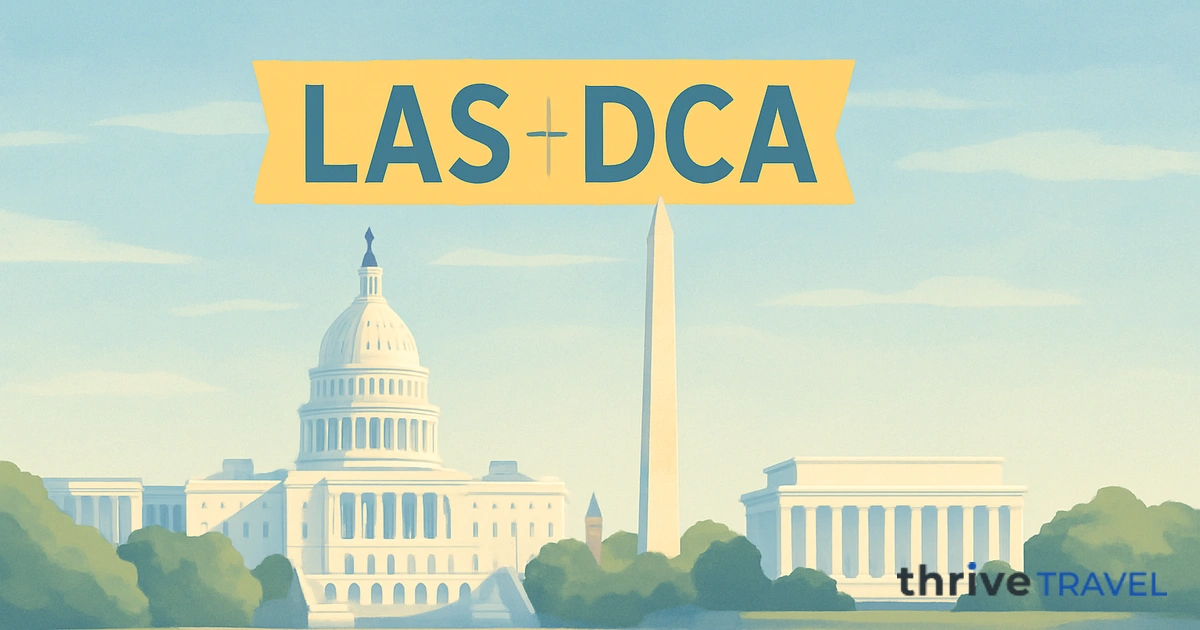
The route from Las Vegas to Washington D.C. connects two of America's most iconic destinations, linking the glittering desert entertainment capital with the political heart of the nation. Whether travelers are heading east for business meetings on Capitol Hill, museum visits along the National Mall, or simply returning home after a Nevada getaway, this transcontinental flight offers a distinctive travel experience worth planning carefully.
The journey typically takes between four and a half to five hours nonstop, covering roughly 2,070 miles across the American landscape. Passengers departing Harry Reid International Airport often catch stunning aerial views of the Mojave Desert and the Grand Canyon shortly after takeoff, weather permitting. Arrival at Ronald Reagan Washington National Airport is particularly memorable, as the approach along the Potomac River offers a low-altitude glimpse of monuments, government buildings, and the D.C. skyline that few other airports in the country can match.
Several carriers operate this corridor, with American Airlines and Alaska Airlines offering nonstop service, while United, Delta, and Southwest provide one-stop alternatives through hubs like Chicago, Denver, or Baltimore. Nonstop flights typically depart in the early morning or late evening, which suits travelers hoping to maximize their time at either end. Since DCA has a perimeter rule limiting most long-haul flights, seats on this route can fill quickly, especially during peak periods.
Spring and autumn tend to be the most rewarding times to make this trip. Washington's cherry blossoms in late March and early April draw substantial crowds, while October brings crisp weather and colorful foliage across the capital region. Summer travel is popular but often turbulent, as thunderstorms frequently disrupt East Coast arrivals, and D.C.'s humidity can be intense. Winter flights are generally less crowded, though occasional snowstorms may cause delays.
Travelers on the Las Vegas to Washington D.C. route should consider a few practical tips. Booking a window seat on the left side of the aircraft during eastbound travel often provides the best monument views on descent. Because DCA has limited ground transportation compared to Dulles, arranging a Metro ride or rideshare in advance saves time upon landing. Packing layers is wise, given the significant climate difference between the two cities.
What makes this pairing particularly interesting is the cultural contrast. Few flights bridge such distinct American identities in a single afternoon, moving passengers from neon-lit boulevards to marble colonnades. For that reason alone, the LAS to DCA connection remains one of the more character-rich domestic routes in the country.