

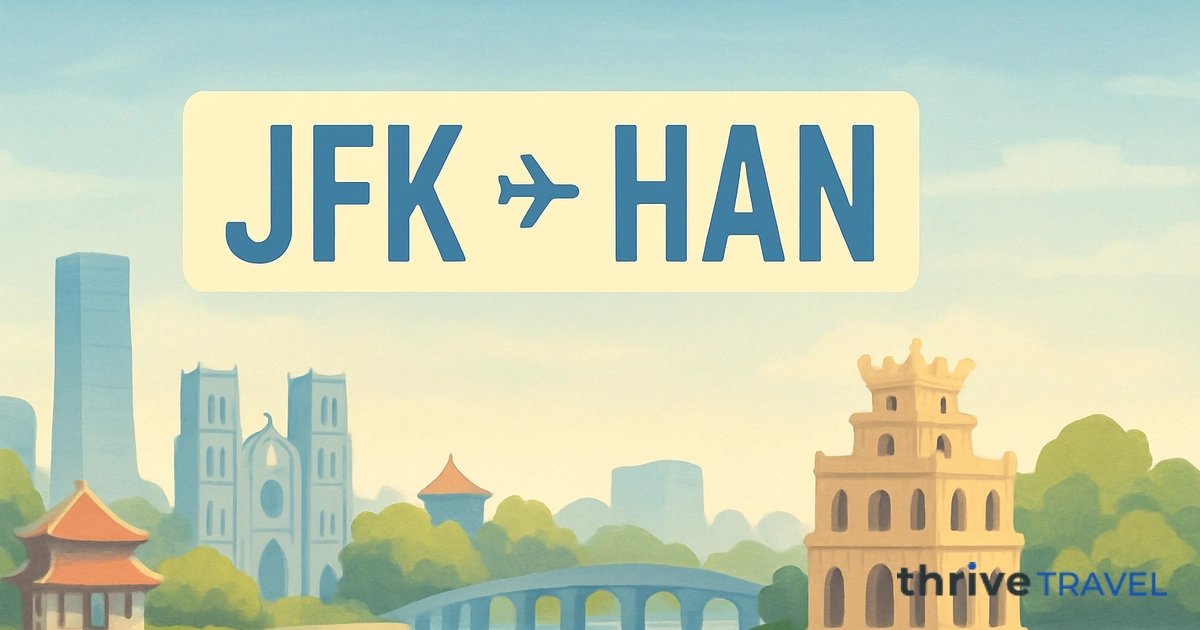
The journey from New York's John F. Kennedy International Airport to Hanoi's Noi Bai International Airport is one of the longer trips a traveler can take, spanning roughly 8,300 miles and crossing twelve time zones. Because no airline currently offers a nonstop service between the two cities, passengers should expect at least one layover, with total travel times typically ranging from 19 to 26 hours depending on the routing.
The most common connection points are major Asian hubs such as Seoul Incheon, Tokyo Narita, Taipei, Hong Kong, and Doha. Korean Air and Asiana via Incheon, Cathay Pacific through Hong Kong, EVA Air via Taipei, ANA and Japan Airlines through Tokyo, and Qatar Airways via Doha are among the most popular choices. Travelers heading toward Hanoi often find that Asian carriers provide smoother transit experiences, as their hub airports are well organized for onward flights into Vietnam. Vietnam Airlines also offers convenient codeshare itineraries that connect from JFK partner flights.
The best time to make the trip depends on what you want to see in northern Vietnam. The cooler, drier months between October and April are generally considered the most comfortable for exploring Hanoi's Old Quarter, taking day trips to Ha Long Bay, or venturing into the mountains around Sapa. The summer months bring heat, humidity, and the chance of typhoons, though fares can be more flexible during this shoulder period. Tet, the Vietnamese Lunar New Year, falls in late January or February and is a culturally rich but busy time to arrive, so booking well in advance is wise.
For a smoother experience on this long-haul journey, choose a layover of at least two hours to allow for terminal changes and immigration in transit countries that require it. Staying hydrated, walking the cabin periodically, and adjusting your sleep schedule a few days before departure can make a real difference given the significant time shift. Hanoi runs seven hours ahead of Eastern Standard Time and twelve hours ahead during daylight saving, so jet lag is almost inevitable.
What makes the route from JFK to HAN particularly rewarding is the contrast at either end. Departing from one of the world's busiest international gateways and arriving in a city where centuries-old pagodas sit beside French colonial boulevards and bustling street food markets creates a striking sense of transition. For many travelers, the long flight is simply the prologue to one of Southeast Asia's most atmospheric capitals.