

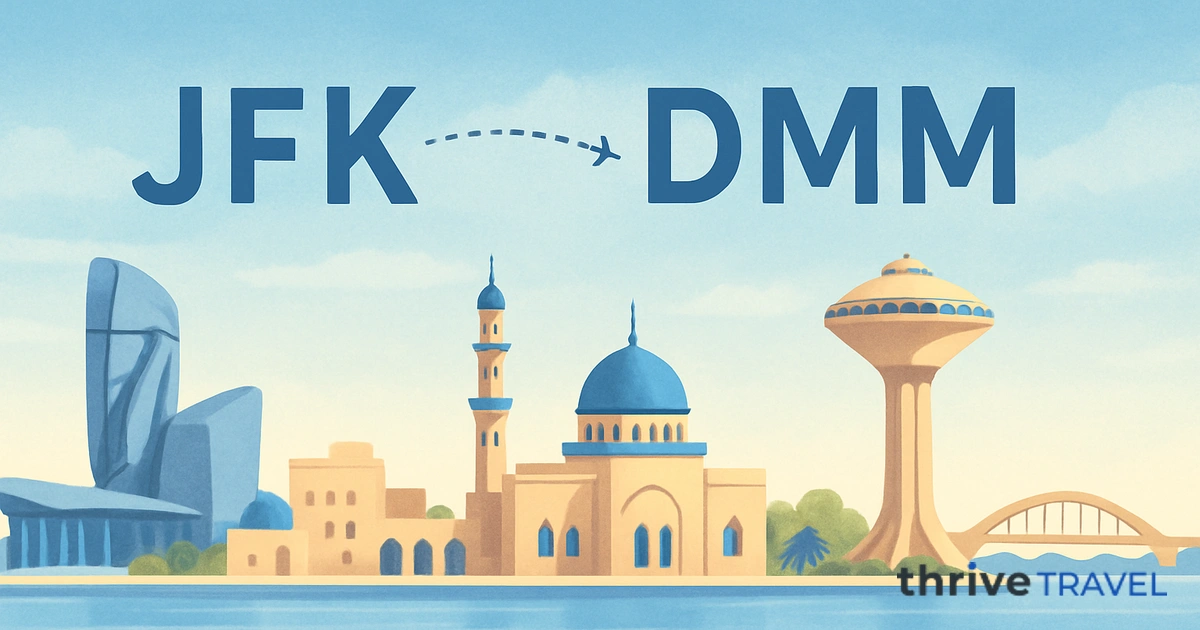
The journey from New York's John F. Kennedy International Airport to King Fahd International Airport in Dammam connects one of the world's busiest aviation hubs with the heart of Saudi Arabia's Eastern Province. While there are no nonstop services currently operating between these two cities, travelers can expect a one-stop itinerary that typically takes between 15 and 20 hours, depending on layover length and routing.
Most passengers transit through major Middle Eastern or European hubs. Emirates routes travelers through Dubai, Qatar Airways via Doha, Turkish Airlines through Istanbul, and Lufthansa or British Airways through Frankfurt or London. Saudia, the national carrier of Saudi Arabia, offers convenient connections through Riyadh or Jeddah for those preferring a single-airline experience. Each option has its merits, with Gulf carriers generally praised for their comfortable cabins, generous baggage allowances, and seamless transfers in modern terminals.
The best time to fly from JFK to DMM is typically between November and March, when temperatures in the Eastern Province become pleasantly mild, hovering around 20 to 25 degrees Celsius. Summer travel, from June through August, can be challenging not because of the flight itself but because Dammam's heat regularly climbs above 40 degrees. Ramadan and the Hajj season also influence ticket availability and pricing, with demand spiking among business and pilgrimage travelers.
The in-flight experience varies depending on carrier and cabin class, but the transatlantic leg alone runs roughly 7 to 13 hours, so choosing an airline with quality entertainment, decent meals, and comfortable seating makes a noticeable difference. Window seats on the right side of the aircraft heading east can offer striking views of the Arabian Peninsula's coastline during daytime approaches.
A few practical tips can ease the journey. Saudi Arabia now offers eVisas to citizens of many countries, simplifying entry for business and tourism. Travelers should be mindful of local customs, particularly regarding dress and behavior, and women are no longer required to wear an abaya, though modest attire remains advisable. Bringing a power adapter for Type G outlets and downloading offline maps before arrival can be useful, especially since some Western apps function differently in the region.
What makes this route particularly interesting is the contrast it offers. Passengers leave the dense energy of New York and arrive in a region defined by oil wealth, desert landscapes, and rapid modernization. Dammam serves as a gateway to Bahrain via the King Fahd Causeway, to the historic oasis city of Al-Ahsa, and to the corporate world of Saudi Aramco. For both business travelers and curious tourists, the JFK to Dammam corridor remains a meaningful link between two very different worlds.