

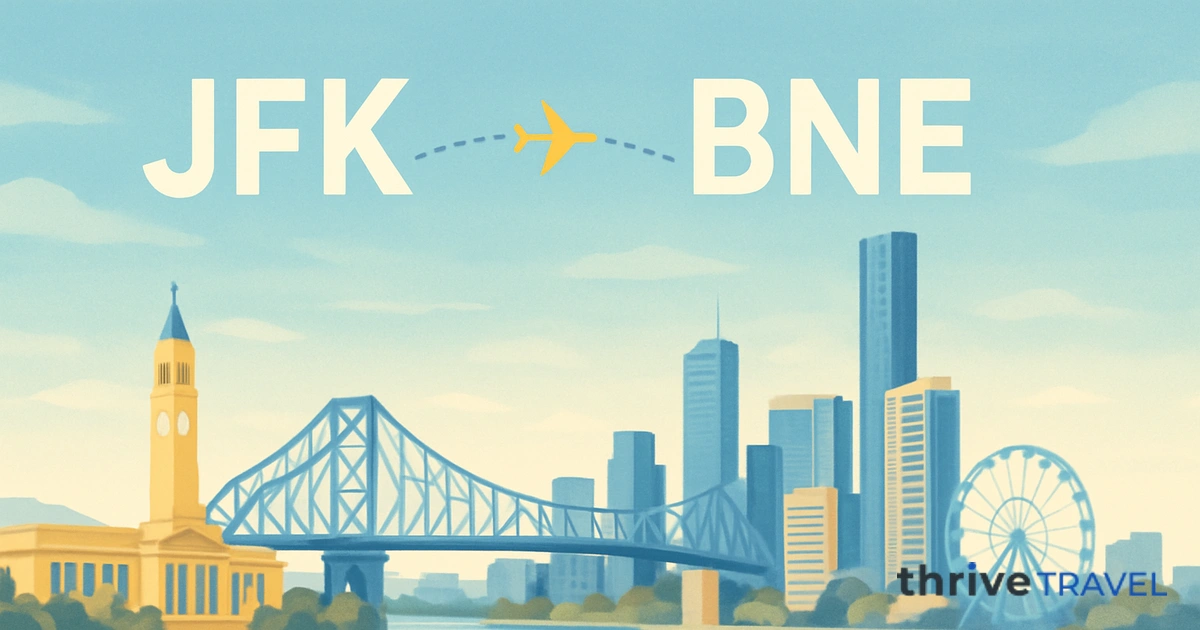
The journey from New York's John F. Kennedy International Airport to Brisbane Airport is one of the longest routes a traveler can take, spanning roughly 9,500 miles and requiring at least one stopover. There are no nonstop flights connecting these two cities, so passengers should expect a total travel time of anywhere from 20 to 30 hours depending on the layover. Despite the distance, this route has become increasingly popular as more Americans discover Queensland's vibrant capital and its role as a gateway to some of Australia's most iconic natural attractions.
Several major airlines serve the corridor from JFK to BNE, with Qantas, United Airlines, and Cathay Pacific among the most common choices. Qantas typically routes through Sydney or Los Angeles, while Cathay Pacific offers connections through Hong Kong. Other options include flying with Singapore Airlines via Singapore or with Emirates through Dubai. Each stopover city presents its own advantages, and savvy travelers sometimes extend their layover into a mini side trip, turning a long-haul inconvenience into an extra destination.
Timing matters when planning this journey. Brisbane enjoys a subtropical climate, meaning winters are mild and summers can be hot and humid. The Australian winter months of June through August offer the most pleasant weather, with warm days and cool evenings that are ideal for exploring the city's outdoor dining scene along South Bank or taking day trips to the Gold Coast and Sunshine Coast. September through November is another sweet spot, as spring brings fewer crowds and comfortable temperatures before the summer holiday rush. Travelers hoping to avoid peak pricing should steer clear of December and January, when Australian summer holidays drive demand.
Comfort is a real consideration on flights from JFK to Brisbane given the sheer duration. Investing in a good neck pillow, noise-canceling headphones, and compression socks can make a noticeable difference. Many experienced flyers on ultra-long routes recommend staying hydrated, moving around the cabin periodically, and adjusting your sleep schedule a day or two before departure to help manage jet lag, which can be particularly brutal given the 14- to 16-hour time difference depending on daylight saving.
Brisbane itself rewards those who make the trek. The city has undergone a remarkable transformation in recent years, with a thriving arts scene, world-class restaurants, and ambitious infrastructure projects ahead of its hosting duties for the 2032 Olympic Games. From the lush greenery of Mount Coot-tha to the koalas at Lone Pine Sanctuary, there is a distinctive blend of urban energy and natural beauty that sets Brisbane apart from its better-known Australian siblings. For anyone willing to endure the long haul, the payoff is well worth it.