

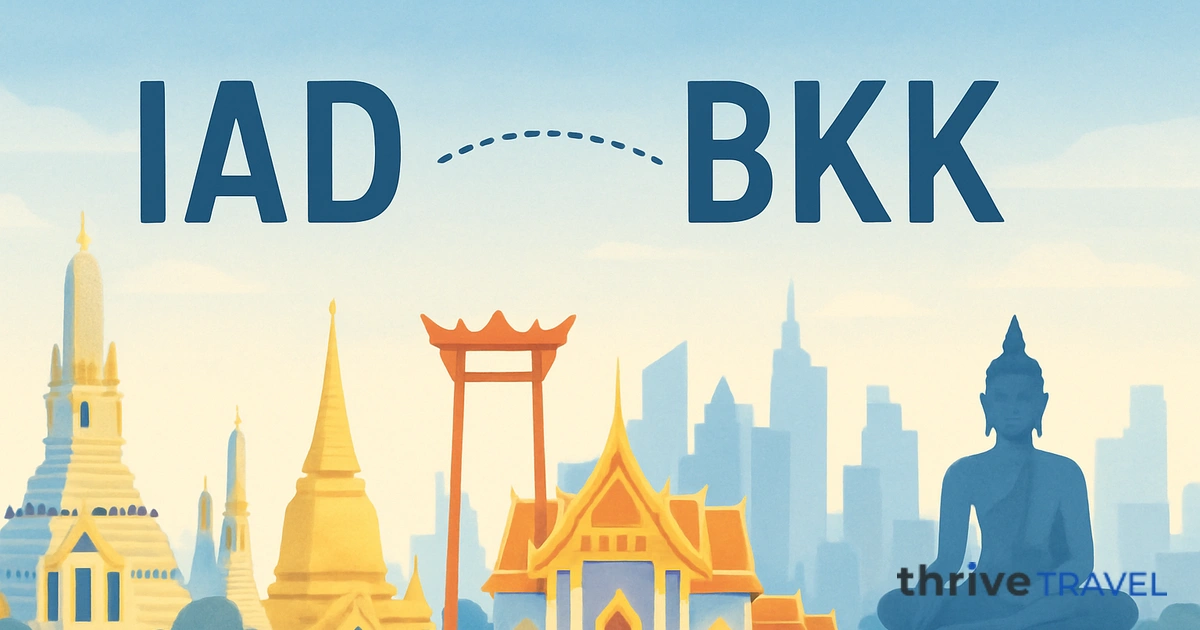
Connecting the political heart of the United States with one of Southeast Asia's most electrifying capitals, the route from Washington Dulles to Bangkok is a journey that bridges vastly different worlds. Whether you're drawn by the ornate temples, legendary street food, or the warmth of Thai hospitality, this long-haul flight opens the door to an unforgettable destination.
The distance between IAD and BKK spans roughly 8,800 miles, and total travel time typically ranges from 17 to 22 hours depending on whether you fly with a connection or manage to secure one of the limited nonstop options. Historically, nonstop service on this route has been offered intermittently, so most travelers find themselves connecting through major hubs like Tokyo Narita, Seoul Incheon, Doha, or Frankfurt. Airlines commonly serving this corridor include All Nippon Airways, Korean Air, Qatar Airways, and Thai Airways, each offering competitive service with varying layover durations. Choosing a connection through a Middle Eastern hub often shaves off wait time compared to European stopovers, though frequent flyer preferences and alliance memberships may steer your decision.
Timing your trip wisely makes a significant difference. Bangkok's most pleasant weather falls between November and February, when temperatures are relatively mild and humidity drops to tolerable levels. This cool season coincides with peak tourist demand, so booking well in advance is advisable. The shoulder months of March and October can offer a reasonable compromise between decent weather and thinner crowds. Avoid the peak of the hot season in April unless you're specifically visiting for the spectacular Songkran water festival, which transforms the entire city into a joyous celebration.
For the long-haul leg of flying from Washington Dulles to Bangkok, seasoned travelers recommend a few strategies. Noise-canceling headphones and a quality neck pillow are near-essential companions. Staying hydrated throughout the flight helps combat the fatigue that comes with crossing multiple time zones, and adjusting your sleep schedule a day or two before departure can ease jet lag upon arrival. If your budget allows, a premium economy seat provides meaningfully more legroom on flights exceeding fifteen hours.
Once you land at Suvarnabhumi Airport, the modern facility makes transit into central Bangkok straightforward. The Airport Rail Link whisks passengers downtown in about 30 minutes, and metered taxis are plentiful at the ground-floor arrivals area. The contrast between the quiet suburban landscape around Dulles and the buzzing energy of Bangkok's streets hits almost immediately, a vivid reminder of just how far you've traveled. From the gleaming spires of the Grand Palace to the aromatic chaos of Chinatown's Yaowarat Road, the reward at the end of this route is a city that never fails to captivate.