

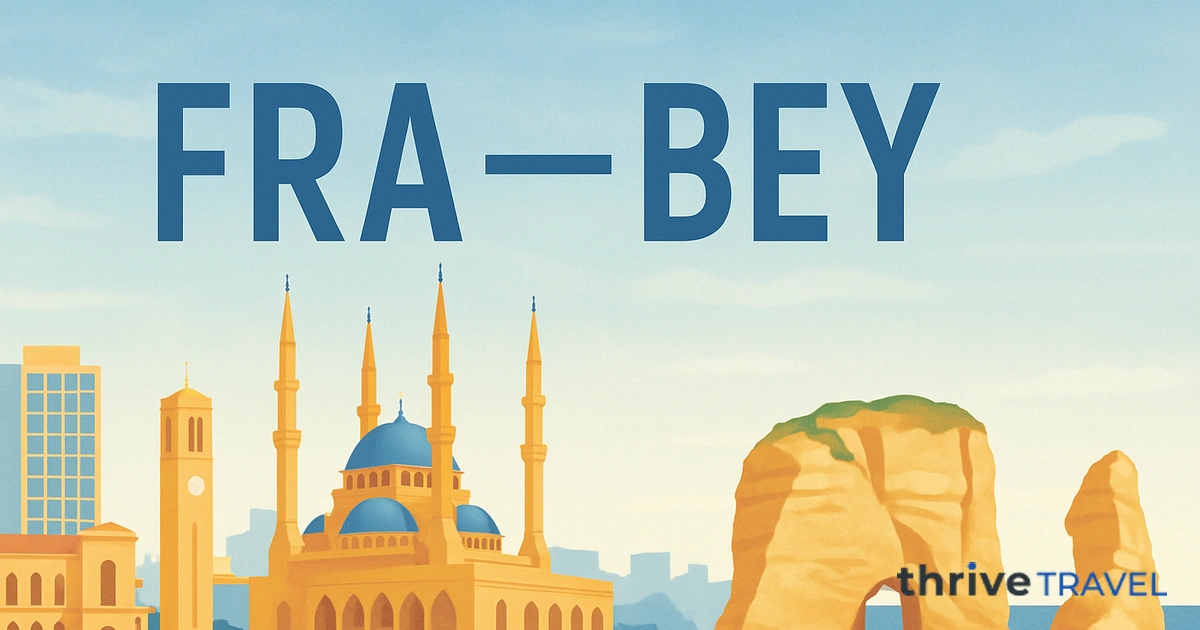
The route from Frankfurt to Beirut connects one of Europe's busiest aviation hubs with the vibrant capital of Lebanon, a city that has long captivated travelers with its unique blend of Mediterranean charm, ancient history, and modern resilience. With a flight time of roughly four and a half hours, this journey bridges two very different worlds in a surprisingly short span.
Frankfurt Airport, Germany's largest, serves as a natural launchpad for travelers heading to the Middle East. Several carriers operate flights from Frankfurt to Beirut, with Lufthansa and Middle East Airlines being the most prominent options. Lufthansa typically offers daily nonstop service, while MEA, Lebanon's national carrier, also maintains a strong presence on this corridor. Both airlines provide solid service, though MEA is often praised for its hospitality and onboard Lebanese cuisine, which gives passengers a taste of what awaits them before they even land.
Rafic Hariri International Airport in Beirut is compact and manageable, making arrivals relatively smooth despite occasional congestion during peak travel periods. From there, the city center is just a short taxi ride away, and the energy of Beirut hits you almost immediately. The capital is famous for its nightlife, its food scene — widely considered among the finest in the region — and a cultural richness shaped by millennia of layered civilizations.
Timing matters when planning this trip. Spring, from April through June, is arguably the most pleasant season to visit Lebanon. Temperatures are warm but not oppressive, wildflowers blanket the mountains, and outdoor dining becomes irresistible. Autumn is equally appealing, with mild weather and fewer crowds. Summer can be hot and humid along the coast, though the mountains offer a cool retreat. Winter brings skiing to the Lebanese mountains, an experience that surprises many first-time visitors who don't associate the country with snow.
For those flying from Frankfurt to Beirut, a few practical tips are worth noting. Lebanese visa policies are generally welcoming to European passport holders, with visas often granted on arrival at no charge. The local currency situation can be complex, so carrying US dollars or euros is advisable alongside Lebanese pounds. Credit cards are accepted in many establishments but cash remains important.
What makes this route particularly compelling is the contrast it offers. In under five hours, travelers move from the orderly efficiency of central Europe to a city defined by spontaneity, warmth, and an irrepressible spirit. Whether visiting for business, family, or pure curiosity, the journey between these two cities rewards travelers with an experience that feels far bigger than the distance suggests.