

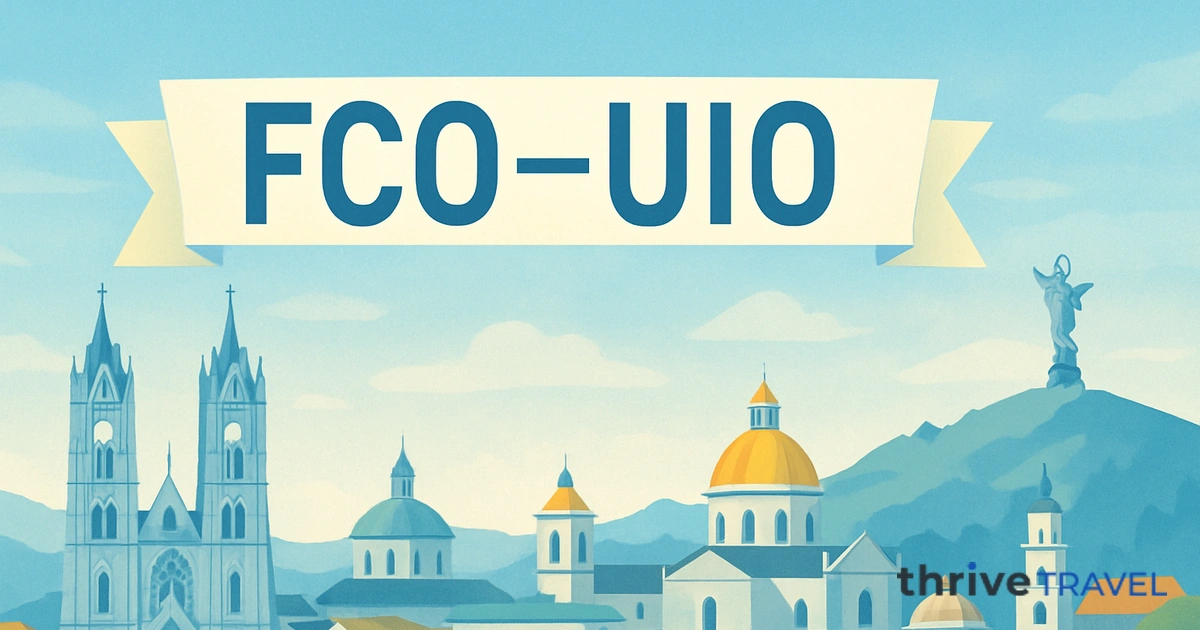
Connecting two cities steeped in history, culture, and UNESCO heritage, the route from Rome Fiumicino to Quito's Mariscal Sucre International Airport is one of those journeys that feels like traveling between parallel worlds. Both capitals sit at dramatically different altitudes — Rome near sea level and Quito perched at nearly 2,850 meters in the Andes — making the arrival experience alone something to prepare for.
There are currently no direct flights from FCO to UIO, so travelers should expect at least one layover. Common connection points include Madrid, Bogotá, Panama City, and Miami. Airlines frequently operating segments of this route include Iberia, LATAM, Copa Airlines, Avianca, and American Airlines. Total travel time typically ranges from 16 to 22 hours depending on the connection city and layover duration. Madrid tends to offer the most efficient path, with Iberia providing smooth connections through its hub at Barajas airport.
Seasonal timing matters when planning this trip. Quito enjoys a mild climate year-round thanks to its equatorial location, but the driest months — June through September — are generally the most pleasant for sightseeing and excursions to nearby attractions like the Otavalo market or the cloud forests of Mindo. Italian travelers often find that flying during European autumn or early winter lets them escape the colder months at home while arriving in Ecuador during comfortable conditions. Holiday periods around Christmas and Carnival tend to see higher fares, so booking well in advance is advisable.
One practical tip for this journey: give yourself time to acclimatize upon arrival in Quito. The altitude can catch even experienced travelers off guard, causing headaches and fatigue during the first day or two. Drinking plenty of water and taking things slowly helps significantly. Many seasoned visitors recommend spending a night or two in Quito before heading to higher-altitude destinations like Cotopaxi or the Avenue of Volcanoes.
The cultural contrast between Rome and Quito is striking and rewarding. Where Rome offers ancient imperial ruins and Renaissance masterpieces, Quito's colonial old town — the first city ever designated a UNESCO World Heritage Site — delivers baroque churches, cobblestone streets, and indigenous Andean influences woven into every corner. The gastronomy shifts dramatically too, from Roman pasta traditions to Ecuadorian staples like locro de papa and ceviche de camarón.
Flights from Rome to Quito appeal to adventurous travelers, history enthusiasts, and those drawn to South America's incredible biodiversity. With the Galápagos Islands just a short domestic flight from Quito, this route often serves as the first leg of a much grander expedition.