

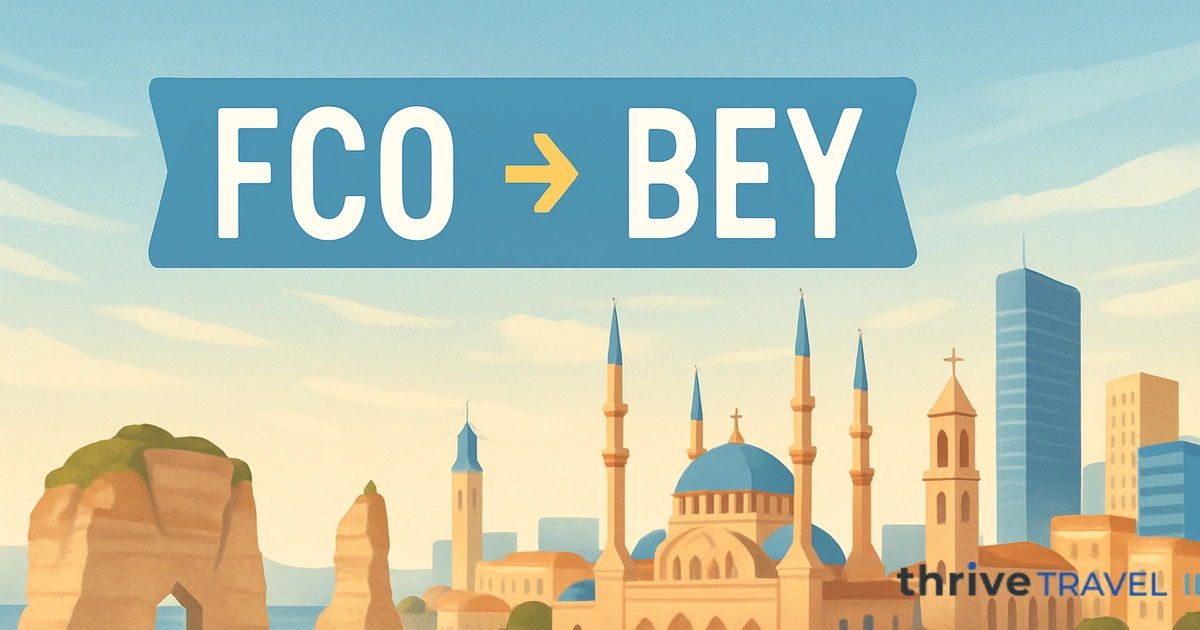
The journey from Rome Fiumicino to Beirut connects two cities that share a deep relationship with antiquity, Mediterranean culture, and an unmistakable passion for food and hospitality. Covering roughly 2,100 kilometers across the eastern Mediterranean, this route bridges Italy and Lebanon in just over three and a half hours, making it one of the more accessible links between Southern Europe and the Levant.
Several carriers operate flights from FCO to BEY, with Middle East Airlines being the most prominent, offering direct service on a regular basis. Alitalia's successor, ITA Airways, has also maintained connections on this corridor, and travelers may find seasonal or codeshare options through other European and Middle Eastern carriers. Direct flights typically depart in the afternoon or evening, arriving in Beirut late at night, which suits travelers who prefer to settle into their hotel and wake up refreshed for exploration.
The best time to visit Beirut depends largely on what you're looking for. Spring, from April through June, brings mild temperatures and blooming landscapes across Mount Lebanon, perfect for hiking the Qadisha Valley or visiting the Jeita Grotto. Autumn is equally pleasant and coincides with fewer tourists, offering a more relaxed pace for exploring neighborhoods like Gemmayzeh and Mar Mikhael. Summer can be hot and humid along the coast, though Beirut's vibrant nightlife and beach culture thrive during those months. Winter appeals to an unexpected niche — Lebanon's ski resorts in the Cedars and Faraya are just over an hour from the capital.
For those flying from Rome to Beirut, it helps to know that Rafic Hariri International Airport is compact and relatively easy to navigate. Taxis and ride-hailing apps are the most common way to reach the city center, about a twenty-minute drive without heavy traffic. Currency exchange at the airport tends to offer less favorable rates, so withdrawing Lebanese pounds from ATMs or carrying US dollars is a practical alternative.
What makes this route particularly compelling is the cultural dialogue it represents. Rome and Beirut are both cities where ancient ruins sit comfortably beside modern life, where a meal can last three hours without anyone noticing. Travelers arriving from Italy will find Lebanon's meze tradition surprisingly familiar — the emphasis on shared plates, olive oil, fresh herbs, and convivial dining echoes much of what they left behind in Rome. Yet the differences are equally fascinating, from the Arabic calligraphy adorning Beirut's streets to the sound of the call to prayer drifting over a skyline punctuated by both mosques and churches.
Whether you are visiting for business, reconnecting with family, or simply drawn by curiosity, this route offers a remarkably efficient passage between two of the Mediterranean's most storied capitals.