

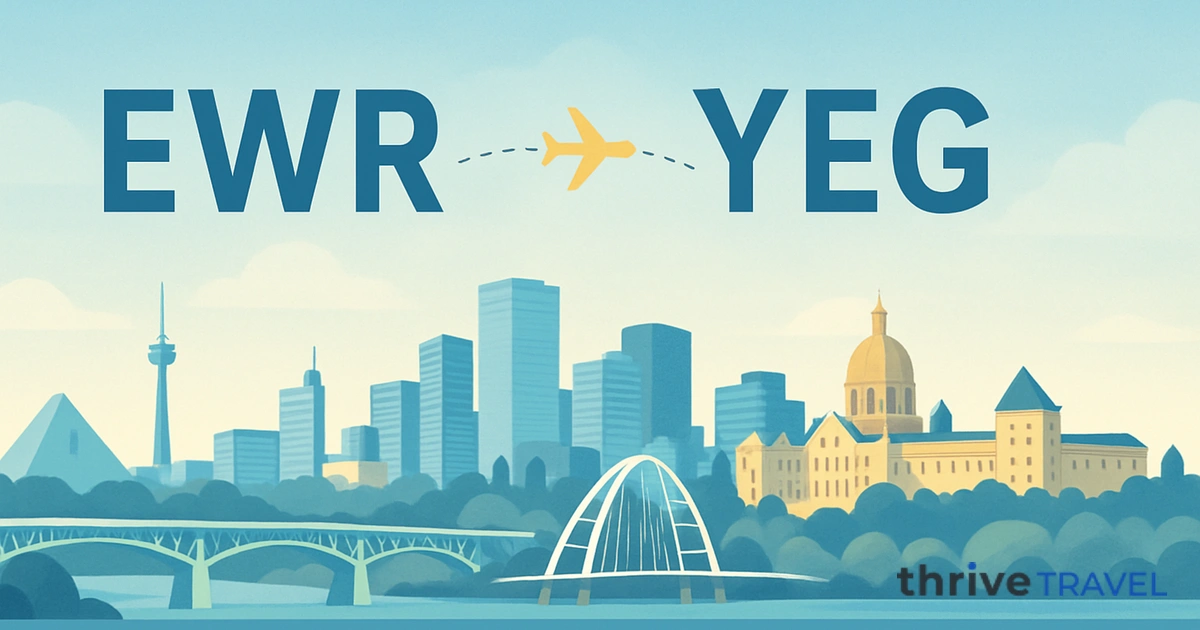
The journey from Newark Liberty International Airport to Edmonton International Airport connects the bustling northeast corridor of the United States with the gateway to Canada's northern wilderness. Covering roughly 2,000 miles, this route typically takes between five and eight hours depending on whether you catch a direct service or route through a connecting hub such as Toronto, Chicago, or Calgary.
Several airlines serve this pairing, with Air Canada being the most common carrier thanks to its extensive Canadian network. United Airlines also offers convenient options, often with a single stop, while WestJet occasionally features on itineraries via western Canadian hubs. Nonstop flights are relatively rare, so most travelers should expect a layover, which can actually work in your favor if you'd like to break up the journey or explore a connecting city briefly.
Timing your trip matters. Edmonton experiences dramatic seasonal shifts, and the best window for most visitors falls between late May and early September, when temperatures are mild and daylight stretches well into the evening. Summer is ideal for exploring Elk Island National Park, the North Saskatchewan River Valley, or making the drive out to Jasper. Winter, though bitterly cold, has its own appeal for those seeking snow sports, the northern lights, or the festive atmosphere of holiday markets. February visitors often plan around the Silver Skate Festival, while August brings the vibrant Edmonton International Fringe Festival.
When booking flights from Newark to Edmonton, midweek departures generally offer better fares and lighter cabins. Tuesday and Wednesday flights out of EWR tend to be less hectic, and arriving in Edmonton in the afternoon gives you time to settle in before adjusting to the two-hour time difference. Pack layers regardless of season, as prairie weather can swing unexpectedly, and keep in mind that Edmonton's airport sits about 30 kilometers south of the city center, so arrange ground transport in advance.
What makes this particular route interesting is the contrast it offers. You leave one of the densest metropolitan regions in North America and land in a spacious, sky-dominated prairie city that serves as a launching point for the Canadian Rockies and beyond. Business travelers connected to the energy sector frequent this corridor, but so do adventurers heading north for hiking, fishing, or road trips along the Icefields Parkway.
With a bit of planning around seasons, connections, and carriers, the trip between these two cities can be smooth, scenic, and rewarding, whether you're visiting family, chasing outdoor experiences, or exploring western Canada for the first time.