

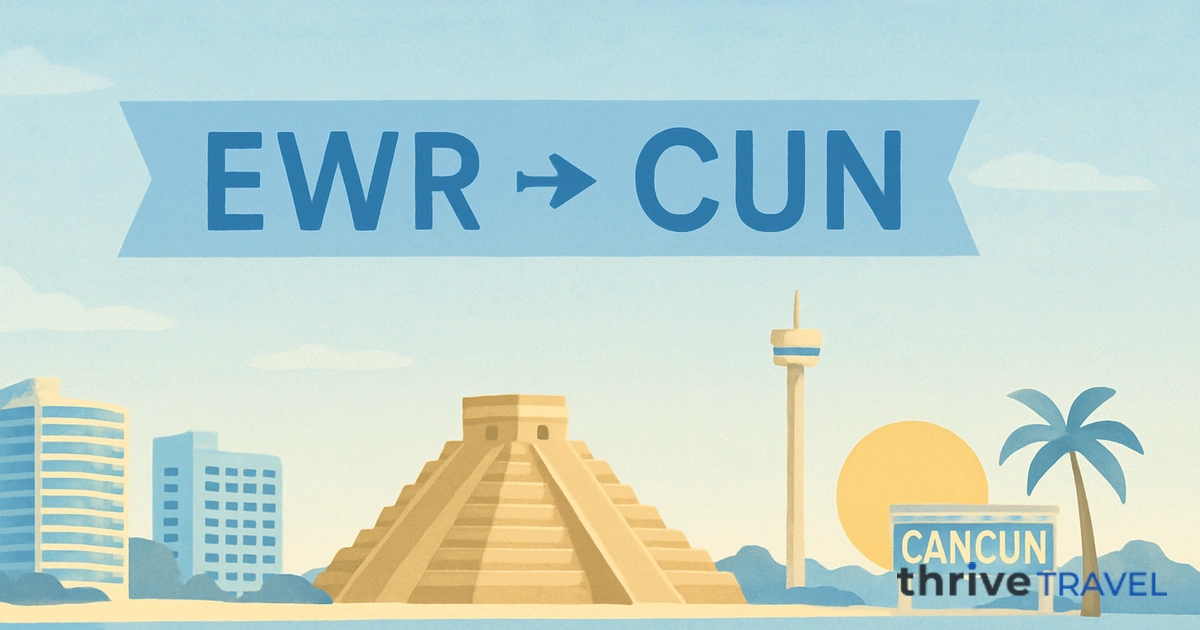
The journey from Newark Liberty International to Cancún International is one of the most popular escapes for East Coast travelers looking to swap city pace for turquoise water. Covering roughly 1,600 miles, the nonstop flight typically takes between four and a half and five hours, depending on winds and seasonal traffic. It's a manageable trip that lets you leave New Jersey in the morning and be strolling along the Hotel Zone by mid-afternoon.
Several major carriers operate this corridor. United Airlines dominates with the most frequent nonstop service, given Newark's role as one of its main hubs. JetBlue also flies the route seasonally, and travelers willing to connect can find options through American, Delta, or Spirit routing via cities like Charlotte, Fort Lauderdale, or Atlanta. Aircraft are typically single-aisle jets such as the Boeing 737 or Airbus A320 family, though larger widebodies occasionally appear during peak holiday demand.
The best time to fly from Newark to Cancún depends on what you want out of the trip. December through April brings the driest weather and warmest ocean temperatures, making it prime beach season—but also the most crowded and expensive. Late spring and early summer offer a quieter alternative with strong sunshine, though humidity climbs quickly. Hurricane season runs from June through November, peaking in September, so travelers during those months should watch the forecast and consider flexible tickets. The shoulder months of May and early November often strike a good balance between weather and value.
A few practical tips can smooth the experience. Newark's Terminal C, where most United flights depart, tends to be busy in the early morning, so allow extra time for security. On arrival, Cancún airport has multiple terminals; Terminal 3 handles most U.S. carriers and offers reasonably fast immigration if you fill out your customs declaration in advance. Ground transport to the Hotel Zone or Playa del Carmen is straightforward, but pre-booked shuttles or authorized taxis are safer than the persistent touts inside the arrivals hall.
What makes this route worth flying, beyond the destination itself, is how efficiently it connects the dense northeastern corridor to the Yucatán Peninsula. Beyond the resorts, Cancún serves as a gateway to Mayan ruins like Tulum and Chichén Itzá, the cenotes of the Riviera Maya, and the ferry to Isla Mujeres. For anyone based in the New York metro area, few international flights deliver such a dramatic change of scenery in so little time.