

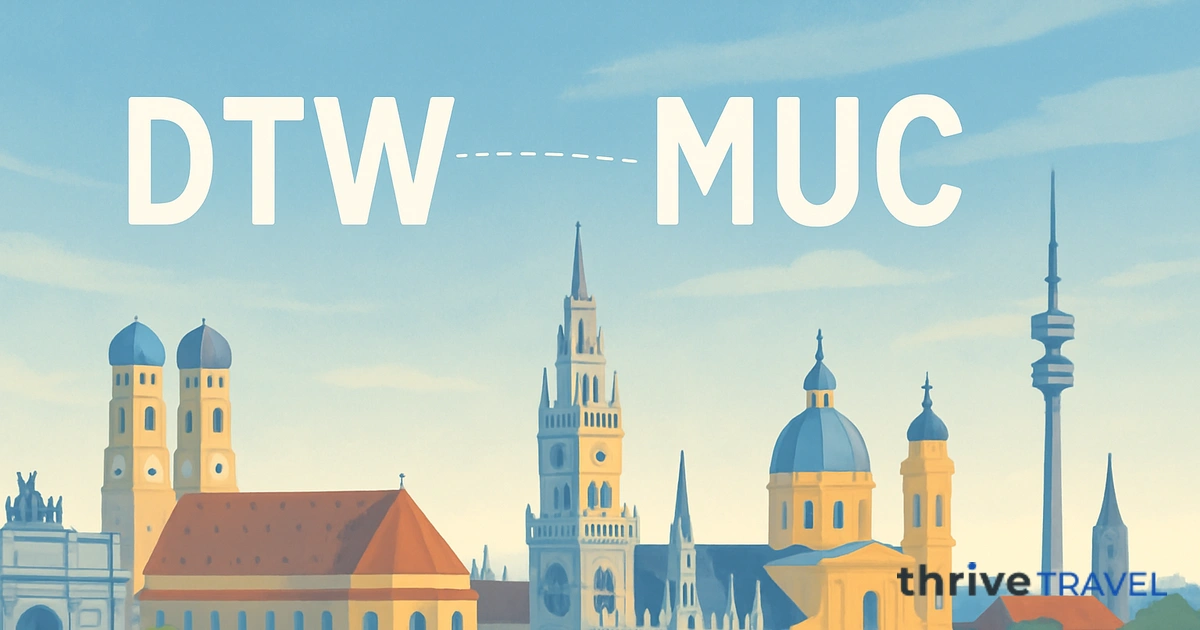
The route from Detroit Metropolitan Wayne County Airport to Munich Franz Josef Strauss Airport connects two proud automotive capitals separated by an ocean and a rich tapestry of cultural differences. For travelers in the American Midwest, this transatlantic corridor offers one of the most convenient gateways to southern Germany and beyond.
Nonstop service between Detroit and Munich is operated by Lufthansa, making this a particularly seamless journey for those who prefer a single-flight itinerary. The flight typically covers roughly 4,300 miles in about nine hours heading eastbound, with the return leg stretching closer to ten hours due to prevailing headwinds. Delta Air Lines and other carriers also serve the route with one-stop connections through major hubs like Amsterdam, Paris, or Atlanta, which can sometimes offer competitive pricing at the cost of additional travel time.
The flight experience on the nonstop Lufthansa service tends to be comfortable, with modern wide-body aircraft featuring personal entertainment screens, complimentary meals, and German beer and wine selections that set the tone for arrival in Bavaria. Seasoned travelers on this route recommend choosing a window seat on the left side of the plane for occasional views of Greenland's icy terrain during the polar routing some flights take.
Timing your trip wisely can make a significant difference. Summer months from June through August are peak season, when Munich buzzes with outdoor beer gardens and Alpine day trips, but fares climb accordingly. September and October bring Oktoberfest, which drives both demand and hotel prices to their yearly highs. For a quieter and often more affordable experience, consider traveling in May or early June, when Bavaria's countryside is lush and the weather is mild. The Christmas market season in late November and December also draws visitors seeking a magical winter atmosphere without the summer crowds.
Once you land in Munich, the airport sits about 28 kilometers northeast of the city center and is well connected by S-Bahn trains that reach Marienplatz in roughly 40 minutes. From Munich, the broader region opens up effortlessly. The Bavarian Alps are less than two hours south by car, Salzburg sits just across the Austrian border, and high-speed rail links make cities like Nuremberg and Stuttgart easy additions to any itinerary.
For Detroit-area travelers, flying from DTW to MUC eliminates the hassle of connecting through East Coast airports that many Midwestern routes require. It is a direct bridge between two cities that share an unexpected bond through their automotive heritage, making the journey feel almost poetic before you even touch down on Bavarian soil.