

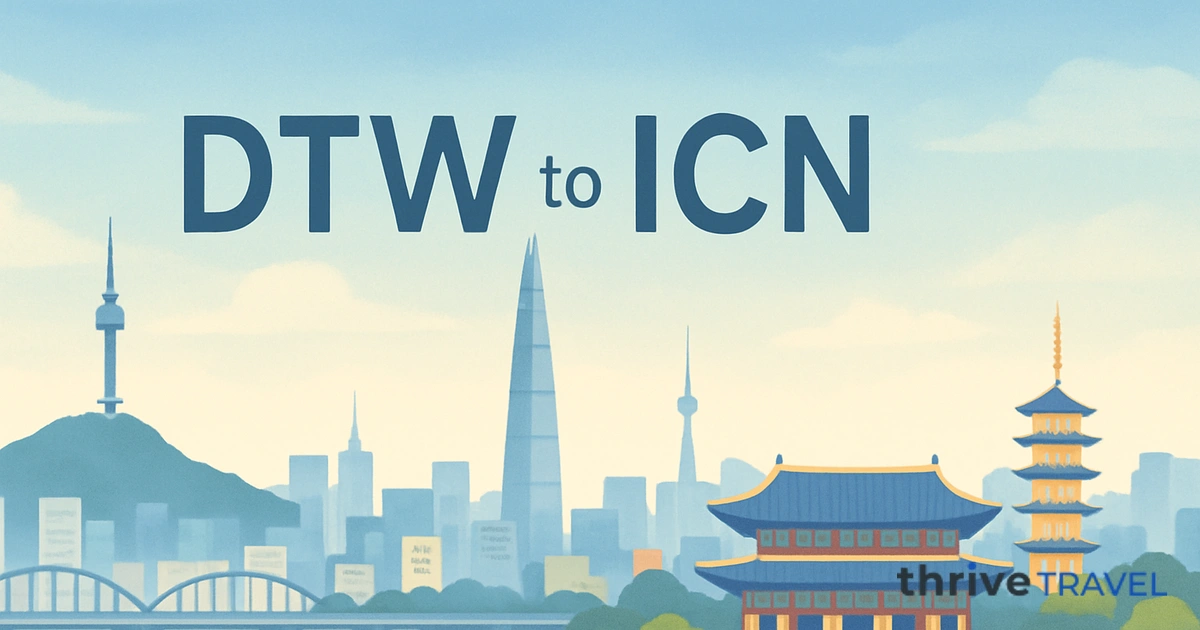
The journey from Detroit to Seoul connects the heart of the American Midwest with one of Asia's most dynamic capitals. Spanning roughly 6,600 miles, the trip typically takes between 13 and 14 hours on a nonstop flight, making it one of the longer transpacific routes available from the Midwest. Delta Air Lines operates the only direct service between Detroit Metropolitan Wayne County Airport and Incheon International, using wide-body aircraft such as the Airbus A350-900, which has become a favorite among long-haul travelers for its quieter cabin, improved humidity levels, and spacious seating across all classes.
Passengers flying from DTW to ICN can expect a smooth departure experience, as Detroit's McNamara Terminal is known for its efficient layout and the iconic light tunnel connecting concourses. On arrival, Incheon consistently ranks among the world's top airports, offering everything from cultural exhibits to indoor gardens and a remarkably quick immigration process. Many travelers appreciate the airport's express train into central Seoul, which takes just under an hour.
Timing your trip matters. Spring, particularly April, brings cherry blossoms across Seoul's parks and palace grounds, while autumn from late September through early November rewards visitors with crisp weather and vibrant foliage in the surrounding mountains. Summer can be hot and humid with occasional monsoon rains, and winter is cold but offers excellent skiing opportunities in nearby Gangwon Province. Flight prices tend to peak during Korean holidays such as Chuseok and Lunar New Year, so booking outside these windows often yields better fares.
For a smoother long-haul experience, travelers often recommend adjusting your sleep schedule a few days before departure to ease the 14-hour time difference. Staying hydrated, walking the aisles periodically, and packing noise-canceling headphones can make the crossing more comfortable. Since the route crosses multiple time zones and the international date line, expect to arrive in Seoul the day after you depart Detroit.
What makes this connection particularly interesting is its role as a gateway between the American auto industry's hub and South Korea's tech and cultural powerhouse. Business travelers and tourists alike use this corridor to access not only Seoul but also onward destinations across Southeast Asia, as Incheon serves as one of the region's most efficient hubs. Whether you're heading over for K-pop concerts, historic palaces, street food in Myeongdong, or business meetings in Gangnam, the Detroit-to-Seoul route offers a reliable and comfortable bridge between two fascinating worlds.