

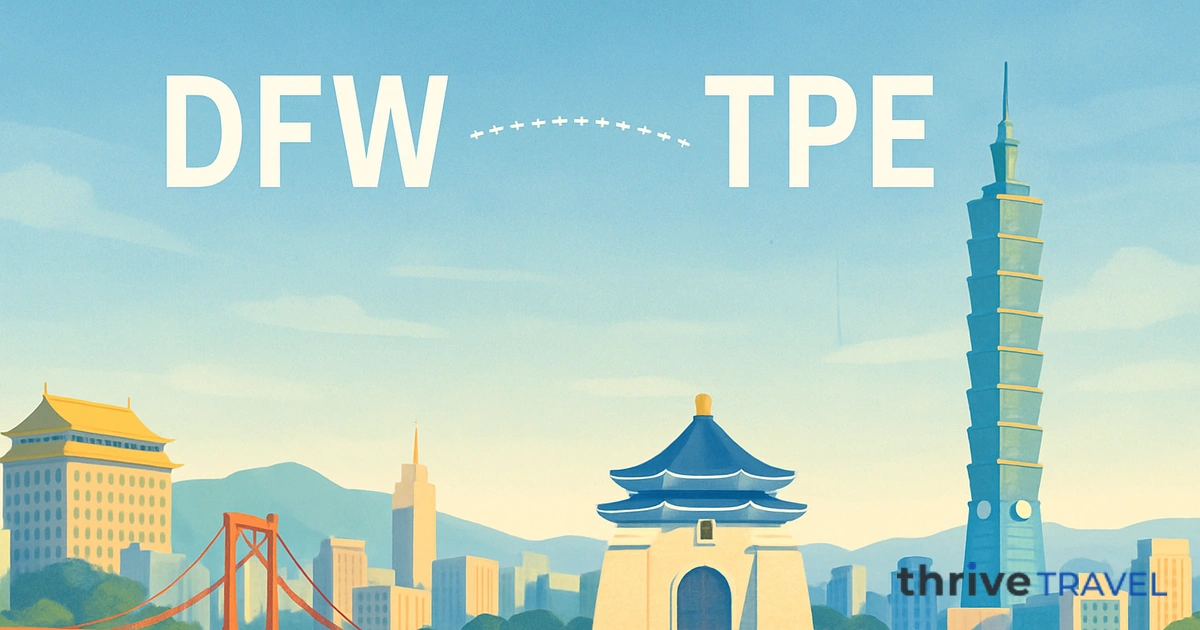
The journey from Dallas/Fort Worth to Taipei is one of the longest nonstop flights operated from Texas, spanning roughly 7,800 miles and crossing the Pacific in around 15 to 17 hours, depending on winds and direction. For travelers heading to East Asia, this route has become a vital gateway, linking the American South directly to one of the most dynamic capitals in the region.
Most passengers on the DFW to TPE route fly with China Airlines, which operates the nonstop service using a Boeing 777-300ER configured with business, premium economy, and economy cabins. The eastbound leg from Taipei back to Dallas tends to be shorter thanks to favorable jet streams, while the westbound flight stretches longer and often departs in the late evening, allowing many travelers to sleep through a sizable portion of the journey. Meal service typically features both Western and Taiwanese options, and the airline is known for its attentive cabin crew and reliable on-time performance.
Choosing when to travel can shape the experience considerably. Spring, particularly March through May, offers mild weather in Taipei and avoids the heavy summer humidity. Autumn, from late September through November, is equally pleasant and often coincides with lower fares once peak summer demand subsides. Travelers should be aware that typhoon season runs roughly from June to October, occasionally causing delays or rerouting. Winter flights are generally smoother, though Lunar New Year sees a surge in demand as Taiwanese expatriates return home, pushing prices upward.
For a flight of this length, preparation matters. Staying hydrated, wearing layers, and adjusting your sleep schedule a few days before departure can ease the jet lag that comes with a 13- or 14-hour time difference. Taoyuan International Airport, where the flight lands, is well organized and connected to central Taipei by a fast and affordable metro line, making the transition into the city straightforward even after a long haul.
What makes flying from Dallas to Taipei particularly interesting is the contrast at either end. Travelers leave behind the wide, sprawling landscape of north Texas and arrive in a compact, energetic city known for its night markets, mountain views, and remarkable food culture. The route also serves as a convenient connection point for onward travel to destinations across Southeast Asia, including Ho Chi Minh City, Bangkok, and Manila.
Whether the trip is for business, family, or curiosity, this transpacific connection offers a practical and comfortable way to bridge two very different worlds in a single flight.