

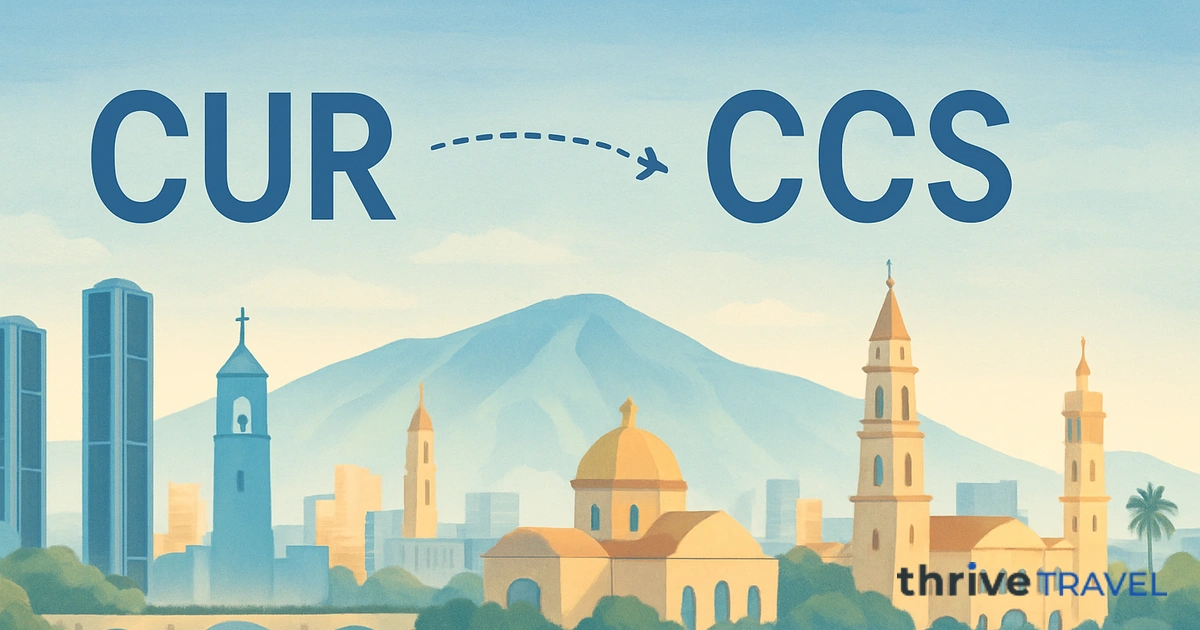
The short journey between Curaçao and Caracas covers just over 200 kilometers of Caribbean sky, yet it connects two strikingly different worlds. On one end sits the pastel charm of Willemstad, with its Dutch colonial facades and turquoise waters. On the other, the sprawling Venezuelan capital nestles in a green mountain valley, framed by the dramatic Ávila range. Despite the proximity, this is not always the most heavily trafficked corridor, which gives the route an unusual character compared to busier Caribbean hops.
Flight times rarely exceed an hour, making this one of the quicker international crossings in the region. Passengers can expect a swift climb, a brief cruise over the southern Caribbean, and a descent that, on clear days, offers glimpses of the Venezuelan coastline and the Cordillera de la Costa rising abruptly from the sea. The flight from Curaçao to Caracas is typically operated with smaller narrow-body aircraft, and cabin service is limited to a quick drink given the short duration.
Airline options have fluctuated over the years due to shifts in regional aviation. Carriers such as Avior Airlines, Laser Airlines, and Estelar have historically served the link, though schedules can change with little notice. Travelers are wise to confirm operations close to their travel date and to allow extra time for check-in, as paperwork and security procedures tend to take longer than the flight itself.
The best time to travel is generally between December and April, when the dry season brings reliable weather on both ends. The rainy months from May through November can produce afternoon thunderstorms over the Venezuelan mainland, occasionally causing delays at Simón Bolívar International Airport in Maiquetía. Mornings are usually the smoothest window for departures, and many regulars prefer early flights to avoid weather-related disruptions.
A few practical notes can make the trip easier. Entry requirements for Venezuela can be strict, so visa rules and onward documentation should be checked well in advance. Currency exchange is best handled before arrival, as financial systems in the country differ considerably from those in the ABC islands. Travelers connecting onward from Caracas to destinations like Margarita Island or the Andes will find this route a convenient gateway.
What makes this corridor interesting is precisely the contrast it offers. In under an hour, you move from a small island shaped by Dutch trading history to a vast Latin American metropolis with its own complex rhythm. For curious travelers, the Curaçao–Caracas connection is less a routine commute than a brief, vivid passage between two Caribbean identities.