

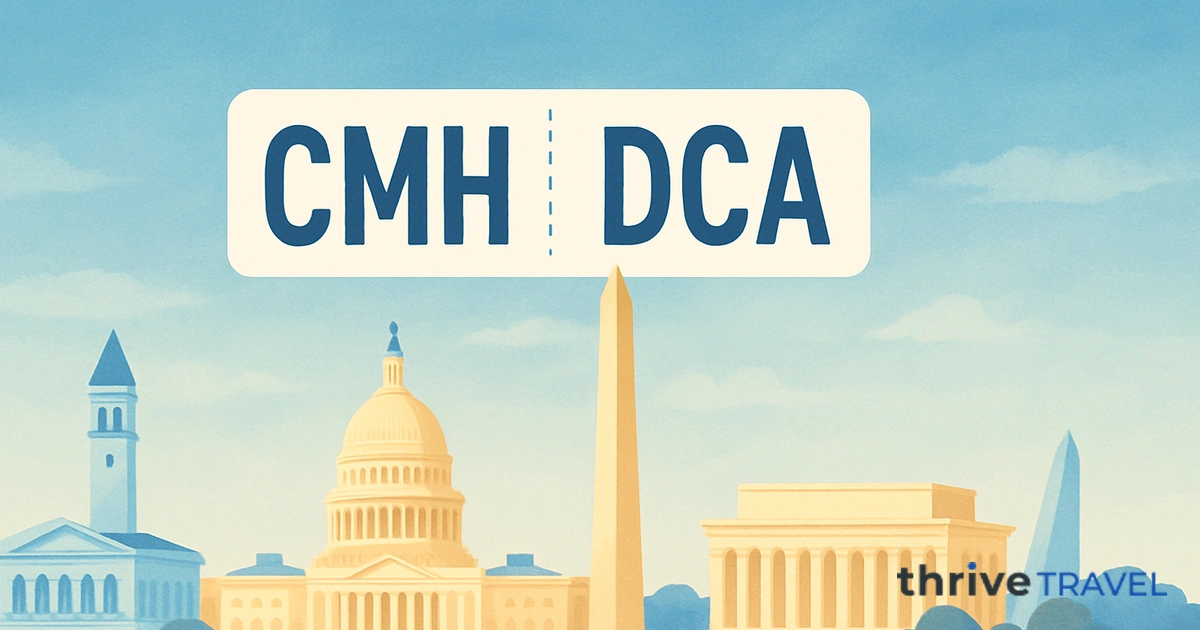
The short hop from Columbus to the U.S. capital is one of the most convenient regional connections in the eastern United States. With flight times typically hovering around ninety minutes, it's a route favored by government workers, business travelers, university students, and weekend tourists heading to the National Mall. Ronald Reagan Washington National Airport (DCA) sits just across the Potomac from downtown D.C., making it a far more practical arrival point than its distant counterpart Dulles, especially if your plans center on Capitol Hill, Georgetown, or Arlington.
American Airlines and United dominate the schedule between John Glenn Columbus International Airport and DCA, with several daily nonstop departures. Southwest and other carriers occasionally offer one-stop alternatives through hubs like Baltimore or Chicago, but for most travelers the direct service is worth the modest premium. Aircraft on the route are usually regional jets such as the Embraer 175 or Bombardier CRJ series, so expect a two-by-two seating layout and limited overhead bin space. Booking a window seat on the right side of the plane during arrival offers a memorable glimpse of the Washington Monument, Pentagon, and the winding Potomac.
Seasonality matters more than you might think. Spring, particularly late March through April, coincides with the National Cherry Blossom Festival, and demand for flights from Columbus to DCA spikes accordingly. Fall brings crisp weather ideal for exploring the Smithsonian museums and monuments on foot, and airfares tend to soften after Labor Day. Summer can be humid in D.C. and prone to afternoon thunderstorms that ripple delays across the East Coast, so early morning departures are the safer bet. Winter is the quietest travel window, though occasional snow events can disrupt schedules at both airports.
A few practical tips help this journey go smoothly. DCA has strict noise and perimeter rules, which is why most flights arrive and depart on time but occasionally reroute in bad weather. TSA PreCheck moves quickly at CMH, where security lines are generally manageable outside of early morning rush. Once in Washington, the Metro's Blue and Yellow lines connect directly to the airport terminals, whisking travelers into the city for a few dollars. Pack light if you can, since regional jets often require gate-checking larger carry-ons.
Whether you're visiting for a Senate hearing, a museum weekend, or a college tour, this Ohio-to-D.C. corridor remains one of the most reliable and rewarding short-haul routes in the country.