

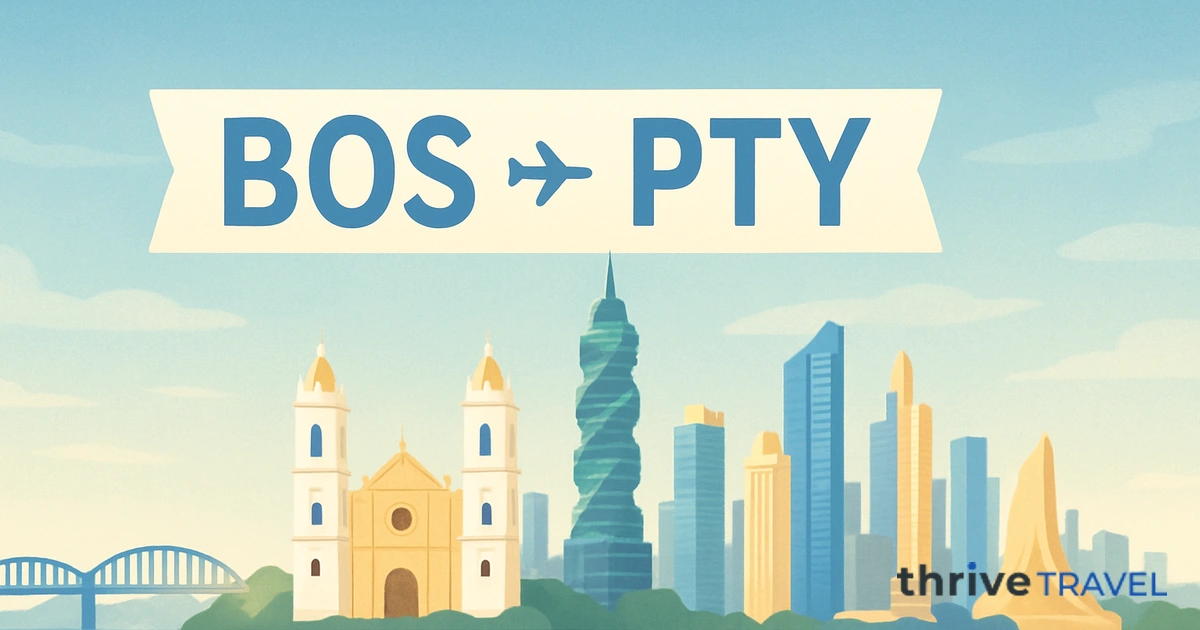
The journey from Boston to Panama City connects the historic Northeast with one of Central America's most dynamic capitals. It's a route that has grown steadily in popularity, drawn by Panama's role as a business hub, its Caribbean and Pacific coastlines, and the iconic canal that reshaped global trade. For travelers heading south, the flight offers a relatively easy transition from New England's crisp air to the humid warmth of the tropics.
Most itineraries between the two cities take between five and eight hours, depending on whether the flight is direct or includes a layover. Copa Airlines operates nonstop service from Logan International to Tocumen International, making it the most straightforward choice for those who prefer a single leg. American Airlines, JetBlue, Delta, and United also serve the route with connections through Miami, Fort Lauderdale, Houston, or Atlanta. A layover can add a few hours but often opens up more flexible departure times and pricing.
When to fly depends largely on what you want out of the trip. The dry season, from mid-December through April, brings sunny days and lower humidity, ideal for exploring Casco Viejo, hiking in Soberanía National Park, or spending time on the San Blas islands. This is peak season, so fares and hotel prices tend to rise, especially around the holidays and Carnival in February. The green season, from May through November, brings afternoon showers but also lush landscapes, fewer crowds, and better value. September and October are the wettest months, though mornings often remain clear enough for sightseeing.
Flights from Boston to Panama City typically depart in the evening, arriving late at night. That timing works well for business travelers but can feel tiring after a long day. Booking a hotel with an easy airport transfer helps ease the arrival. Tocumen is roughly a 30-minute drive from downtown, though traffic can extend that considerably during rush hour.
A few practical tips make the journey smoother. U.S. citizens do not need a visa for short visits, but a passport valid for at least three months beyond arrival is required. The local currency, the balboa, is pegged one-to-one with the U.S. dollar, and dollars are used interchangeably. Spanish is the primary language, though English is widely spoken in hotels and tourist areas.
What makes this particular route rewarding is the contrast it delivers. In a single flight, travelers move from cobblestone streets and colonial brick to skyscrapers rising above a rainforest-lined bay. It's a manageable trip with an outsized payoff, whether the purpose is leisure, business, or a mix of both.