

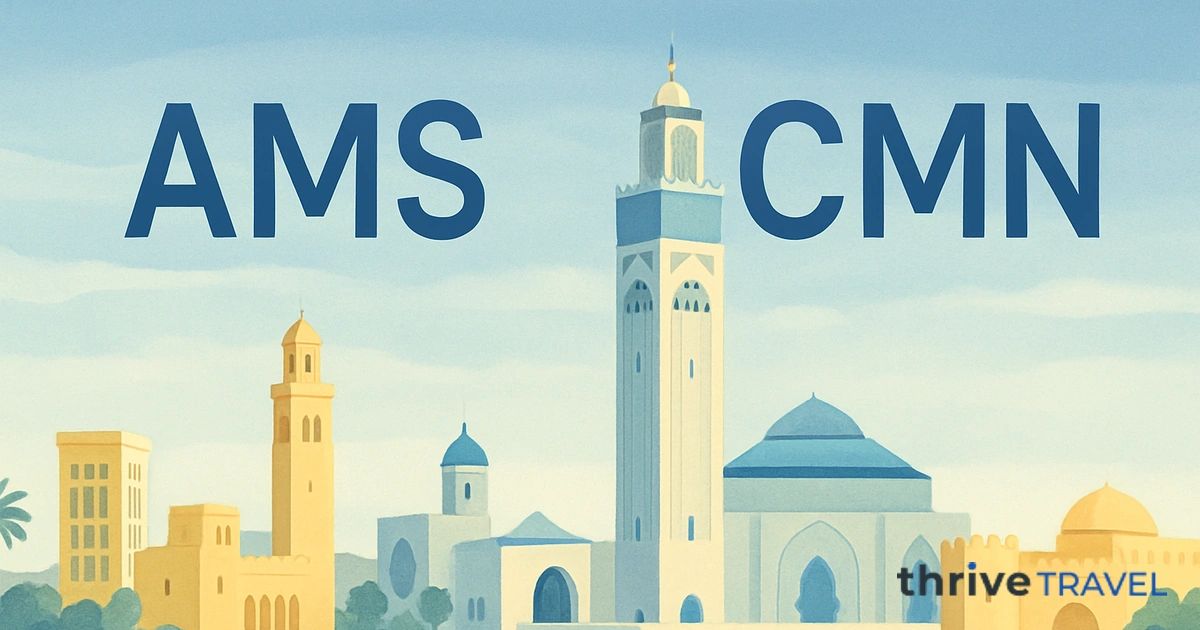
The journey from Amsterdam to Casablanca is one of those routes that quietly bridges two very different worlds. In just over three and a half hours, travelers move from the canals and cool light of the Dutch capital to the bustling Atlantic coast of Morocco, where French colonial architecture meets Arabic street life and the scent of mint tea drifts through cafés. It is a short flight by intercontinental standards, but the cultural distance covered is remarkable.
Several airlines operate this connection, with KLM and Royal Air Maroc offering the most consistent direct services from Schiphol to Mohammed V International Airport. Transavia often provides a more relaxed option, particularly useful for travelers packing lighter and heading straight to the coast. Connecting itineraries through Paris, Madrid, or Lisbon are also common and can suit those with flexible schedules. Direct flights typically depart in the morning or early afternoon, arriving in time for a late Moroccan lunch of tagine or grilled sardines by the harbor.
Seasonality matters on this route more than many travelers expect. Spring, particularly from March through May, is widely considered the sweet spot, with mild weather in both cities and blooming landscapes along the Moroccan coast. Autumn is equally pleasant and slightly less crowded. Summer brings warm Atlantic breezes to Casablanca, though inland excursions to Marrakech or Fez can become uncomfortably hot. Winter is mild by European standards, and flights tend to be quieter, making it a good period for a cultural city break.
The onboard experience is generally straightforward. Most aircraft used are single-aisle jets such as the Boeing 737 or Airbus A320 family, with a light meal or snack service depending on the carrier. Frequent flyers recommend choosing a left-side window seat on descent, as the approach over the Atlantic offers striking views of the coastline and the vast Hassan II Mosque rising near the shore.
A few practical tips make the trip smoother. EU citizens do not need a visa for short stays in Morocco, but a passport valid for at least six months is required. The local currency, the dirham, is best obtained after arrival, and grand taxis or the airport train provide easy transfers into the city. Booking two to three months ahead usually yields the best fare balance, especially around Moroccan holidays when demand from the diaspora rises.
Ultimately, the Amsterdam to Casablanca route rewards curious travelers with an accessible taste of North Africa, wrapped inside a comfortably short European flight.