

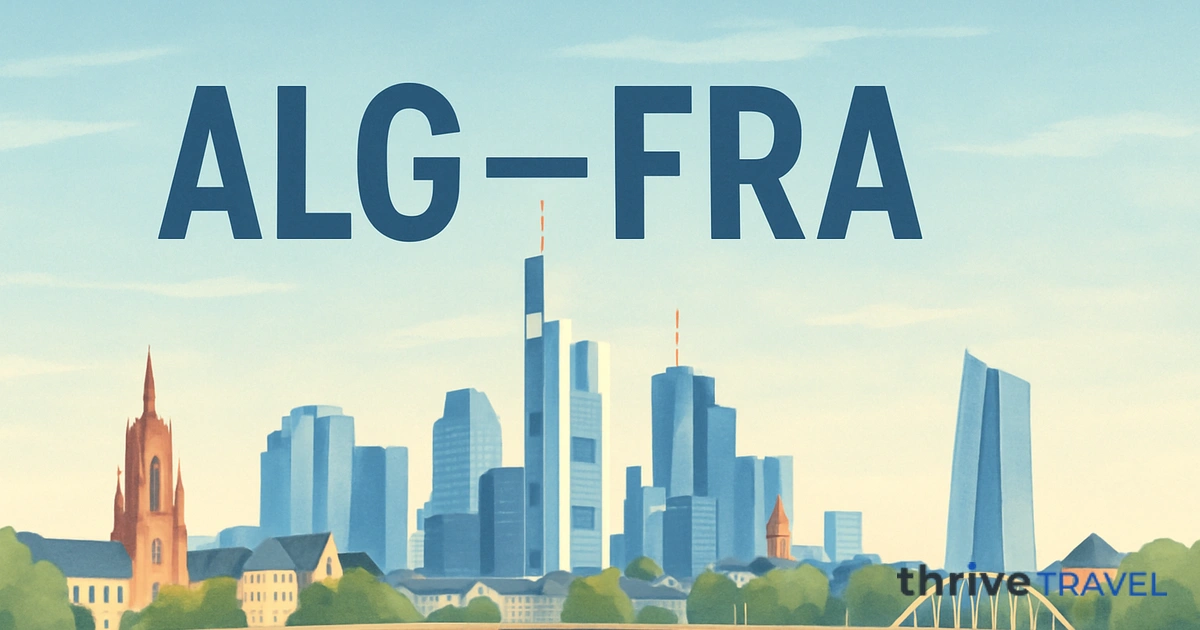
The route from Algiers to Frankfurt connects North Africa's largest city with one of Europe's most important financial and transportation hubs. Spanning roughly 1,500 kilometers across the Mediterranean and into the heart of Germany, this corridor serves a diverse mix of business travelers, students, diaspora communities, and tourists eager to explore either end of the journey. Flight time typically falls between two and a half to three hours, making it a manageable trip that barely requires settling into your seat before descent begins.
Several carriers operate on this route throughout the year. Air Algérie provides direct service and remains a popular choice for travelers heading between the two cities. Lufthansa also connects the destinations, sometimes with a stop depending on the schedule. For those willing to consider layovers, airlines like Turkish Airlines via Istanbul or Air France via Paris can offer competitive alternatives, though the added travel time may not appeal to everyone.
Frankfurt Airport, one of Europe's busiest, is a well-oiled machine with excellent connections to the rest of Germany and the continent by rail and air. Arriving there from Algiers means stepping into an efficient transit network that can take you practically anywhere in Europe within hours. On the other side, Algiers' Houari Boumediene Airport has undergone significant modernization in recent years, improving the departure experience considerably.
Timing your trip wisely can make a real difference. Spring and early autumn tend to be the sweet spot for traveling from Algiers to Frankfurt. German summers are pleasant but can bring peak-season crowds and higher hotel prices, while winters in Frankfurt are cold and gray. If you're heading in the opposite direction, visiting Algiers during the mild Mediterranean winter offers a welcome escape from northern European chill.
Travelers should keep a few practical details in mind. Algerian passport holders need a Schengen visa to enter Germany, so planning well ahead is essential. Currency exchange is another consideration, as the Algerian dinar is not widely convertible outside the country. It's best to arrange euros before arrival in Frankfurt or withdraw from ATMs upon landing.
What makes this particular route fascinating is the cultural contrast it bridges. Algiers, with its Ottoman-era Casbah, French colonial architecture, and bustling Mediterranean waterfront, feels like a world apart from Frankfurt's gleaming skyscrapers and orderly streets. Yet the two cities share a surprising cosmopolitan energy, each shaped by centuries of trade, migration, and cultural exchange. Whether you're flying for family, work, or pure curiosity, this route offers a compact journey between two remarkably different yet equally compelling destinations.