

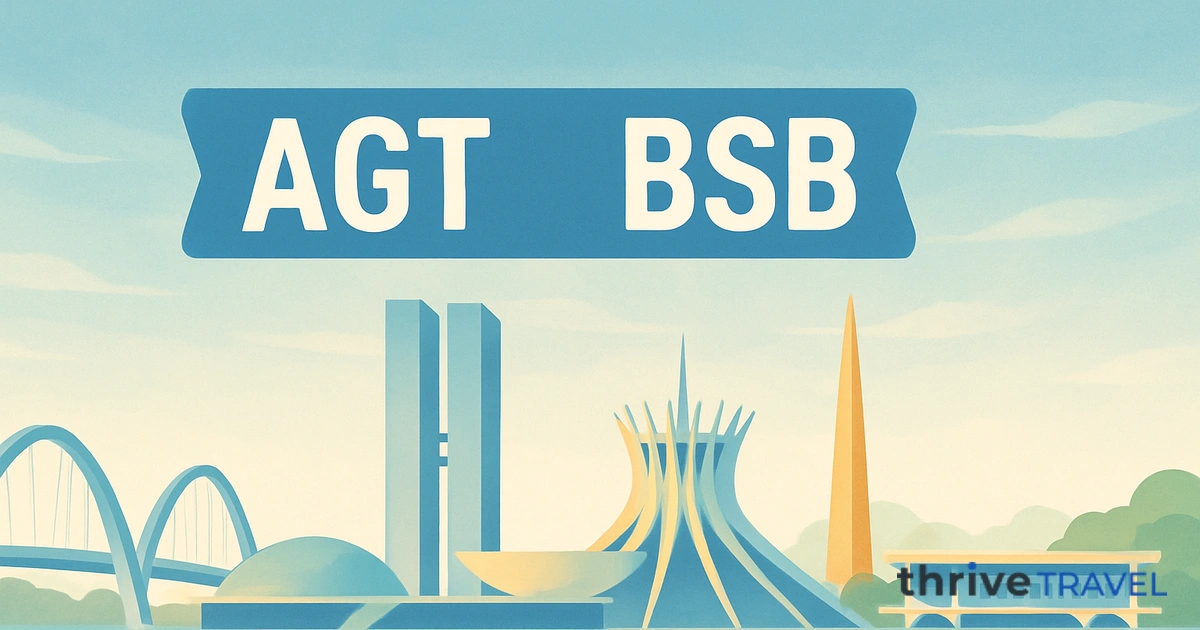
The journey from Ciudad del Este to Brasília connects two strikingly different corners of South America: the bustling border city near the Iguazú Falls and the modernist capital of Brazil. Travelers making this trip often do so for business, tourism, or to transit deeper into Brazil, and while the route is not the busiest in the region, it offers a fascinating glimpse into the contrasts of the continent.
Direct flights between Guaraní International Airport and Brasília's Presidente Juscelino Kubitschek International Airport are limited, so most itineraries involve a connection, frequently through São Paulo or Asunción. Total travel time typically ranges from four to eight hours depending on layover length. Carriers such as LATAM, Gol, and Azul commonly serve segments of this route, and connecting through one of Brazil's major hubs often provides the most reliable schedules. Booking with a single ticket through one airline alliance can simplify baggage handling and reduce stress at transfer points.
The best time to fly from Ciudad del Este to Brasília depends on what you want to experience. The dry season, from May to September, brings cooler temperatures and clearer skies, making it ideal for sightseeing in the capital's open plazas and exploring the futuristic architecture of Oscar Niemeyer. The rainy months between October and March are warmer and greener, with frequent afternoon showers that rarely last long but can occasionally affect short connections. Many travelers prefer the shoulder months of April and September, when crowds thin and weather remains pleasant on both ends of the journey.
A few practical tips can make the trip smoother. Arrive early at Guaraní International, as the airport is smaller and check-in procedures can move slowly during peak hours. Carry your passport even on domestic Brazilian segments, since you are crossing international borders. If you have a long layover in São Paulo's Guarulhos airport, consider booking a lounge pass, as facilities can become crowded. Currency exchange is generally better in Brasília than at the border, though carrying a small amount of Brazilian reais on arrival is wise.
What makes this route interesting is the cultural shift you experience in just a few hours. You leave behind the energetic, multilingual commerce of the Triple Frontier and arrive in a planned city designed in the 1950s, where wide avenues, government monuments, and sweeping curves define the skyline. For travelers curious about how South America's geography and history shape its modern identity, this flight offers a quietly memorable transition between two very different worlds.