

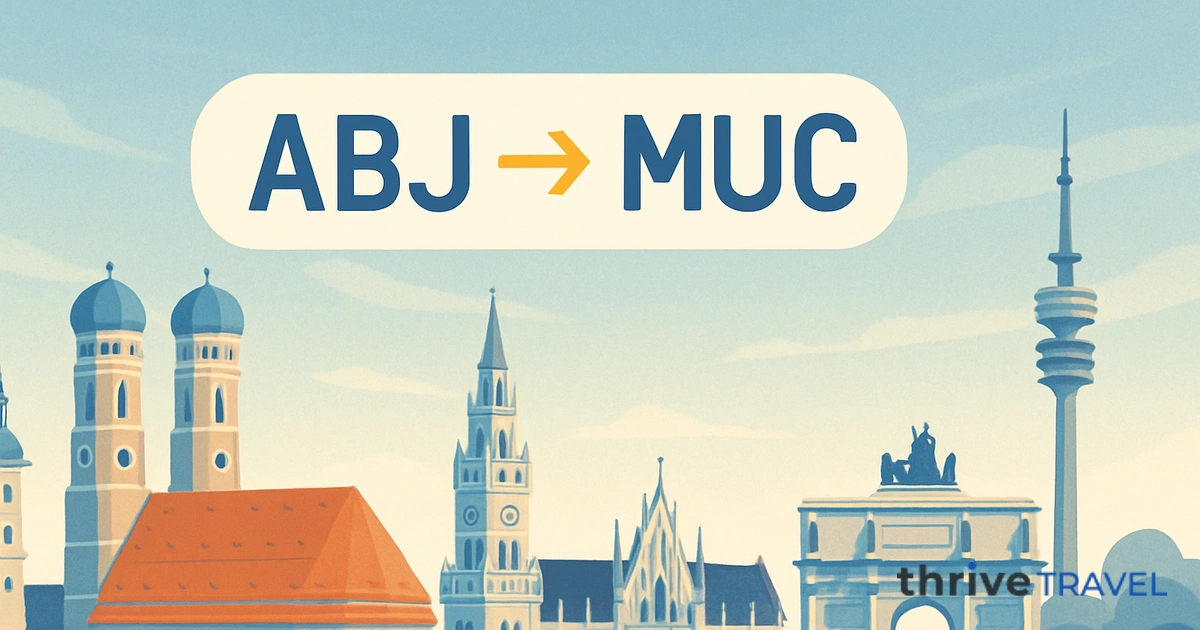
The journey from Abidjan to Munich connects two remarkably different worlds. On one end lies the economic capital of Côte d'Ivoire, a bustling West African metropolis where French is the lingua franca and tropical energy fills the streets. On the other, the elegant Bavarian capital known for its alpine backdrop, world-class museums, and centuries of cultural heritage. Travelers making this trip are in for a rewarding experience, though a bit of planning goes a long way.
Flights from Abidjan to Munich typically involve at least one layover, as direct service between the two cities is not currently available. Common routing options include connections through major European hubs such as Paris, Istanbul, Brussels, or Frankfurt. Airlines frequently serving portions of this route include Air France, Turkish Airlines, Brussels Airlines, and Lufthansa. The choice of carrier often determines whether you stop in a familiar transit airport or discover a new one along the way. Total travel time generally ranges from 10 to 16 hours depending on the connection, so choosing a reasonable layover duration can make all the difference in comfort.
Seasonality plays a notable role when planning this trip. Munich is at its most vibrant between May and October, when beer gardens come alive and the surrounding Alps beckon hikers and day-trippers. September and October bring the world-famous Oktoberfest, which draws millions of visitors and pushes accommodation prices sharply upward. For those hoping to avoid crowds and find more affordable lodging, late spring or early autumn outside the festival window is ideal. On the Abidjan side, departures are year-round, though travelers should be aware that the rainy season from May to July can occasionally cause minor delays.
Practical tips for this route include booking well in advance, especially during European summer and holiday periods. Checking visa requirements is essential, as Ivorian passport holders will need a Schengen visa for Germany. Packing layers is wise regardless of when you travel, since Munich temperatures can swing significantly between day and night, particularly in spring and fall.
What makes this route genuinely interesting is the cultural contrast it offers. Leaving the warm humidity and vibrant markets of Abidjan and arriving in Munich's orderly streets lined with baroque architecture creates a sense of dramatic transition. Whether traveling for business, education, or leisure, the connection between these two cities reflects growing ties between West Africa and Europe. The Ivorian diaspora in Germany continues to expand, adding personal significance to what might otherwise seem like an unlikely pairing. For anyone considering the trip, it is one that rewards curiosity and open-mindedness in equal measure.